VulcanForms Plans Three More Factories With $500 Million in Financing
VulcanForms plans to build three more factories with $500 million in financing, expanding a production system intended to carry complex metal parts from digital design through printing, machining and inspection.
Published November 17, 2026Intelligence / Frontier Tech / Experimental Systems
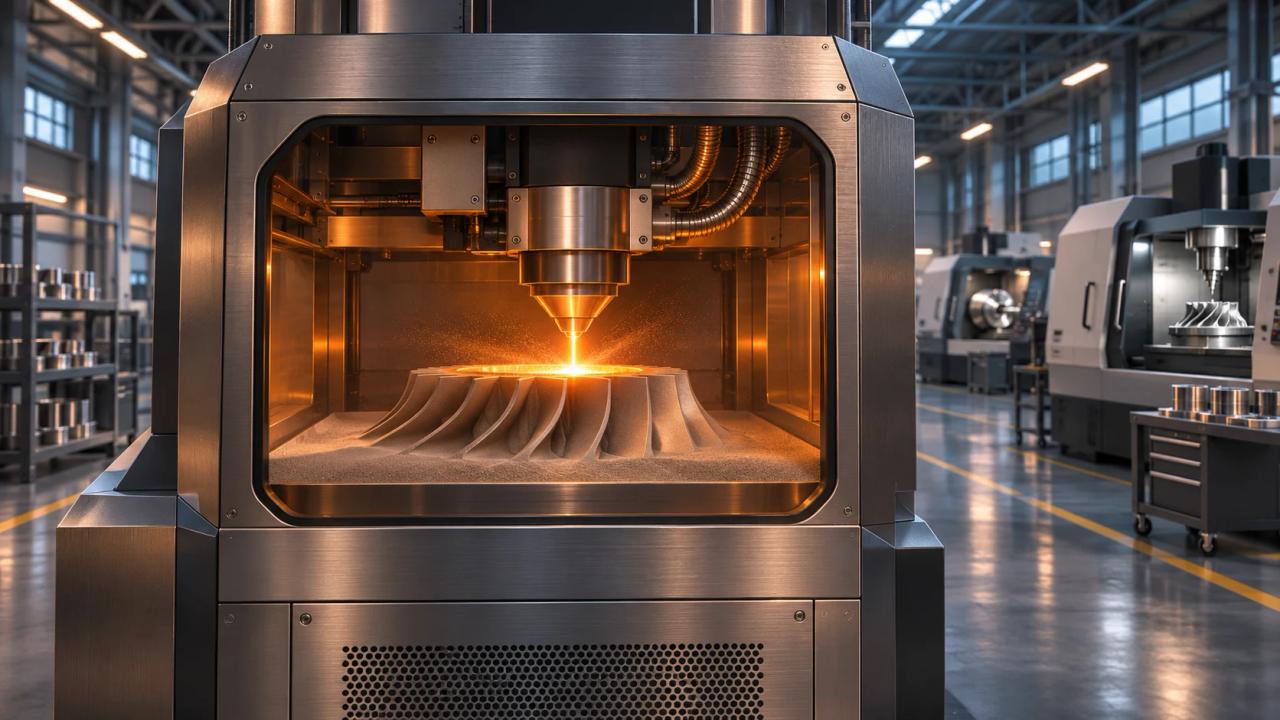
VulcanForms plans to build three more factories with $500 million in financing, expanding a production system intended to carry complex metal parts from digital design through printing, machining and inspection. The ambition is to make that connected factory model work across very different products, from medical implants to consumer electronics and aerospace components. Company announcement
The agreement, announced November 12, brings together J.P. Morgan and funds managed by Apollo. Law firm Simpson Thacher confirmed the transaction the following day and identified it as part of JPMorgan’s Security and Resiliency Initiative. Financing confirmation
The expansion would add to three existing manufacturing sites. VulcanForms says it has secured multibillion-dollar commercial programs across those markets. Its announcement leaves the new plants’ completion dates, output capacities and assigned products undisclosed, so the commercial-program figure provides a measure of the company’s ambition rather than an annual production forecast. Expansion details
The industrial opportunity lies in coordinating the steps around the printer. A part can acquire a complicated shape during printing, then move through precision machining, finishing and inspection before it is ready for a customer. VulcanForms’ strategy is to manage that sequence as one production workflow. Manufacturing platform
The parts behind the factory plan
VulcanForms’ own product examples make the range tangible: a titanium hip cup, the socket component of a hip replacement, and titanium watch housings. The company presents them as applications of its manufacturing platform without identifying the implant models or watch brands. Medical applications · Consumer applications
VulcanForms has also presented a nickel-based superalloy guide vane, a component that directs airflow through a jet engine. A watch housing, an implant and a guide vane each give the factory a different job: meeting the shape, material and finishing requirements of the application. Aerospace applications
One named partner is Specter Aerospace. In September, the companies said VulcanForms had already supported Specter’s hypersonic vehicle development and announced plans to expand into a dedicated production operation. They were evaluating sites for a future facility. The announcement describes an existing development relationship and a manufacturing expansion plan, while leaving individual flight parts and delivered quantities unspecified. Specter partnership
From powder to finished components
The company grew out of work by MIT professor John Hart and Martin Feldmann. Its laser powder bed fusion process uses coordinated laser beams to build metal parts from powder. MIT’s 2022 account describes printers linked with machining, robotics and postprocessing through software that also monitors production. MIT background
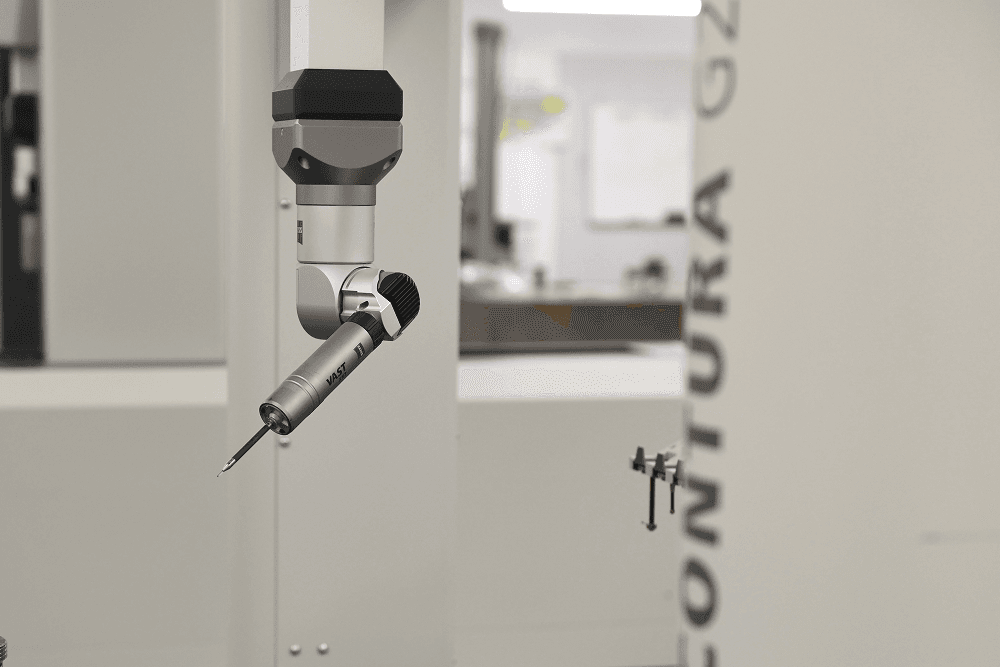
That account offered a concrete example: a titanium cooling component for a supercomputer manufacturer, with dozens of microscopic internal tunnels. Such intricate internal geometry illustrates why a customer might choose additive manufacturing. The production system must then preserve the required quality as orders grow. MIT background
“From the start, we saw 3D printing as a cornerstone of digital manufacturing,” Hart told MIT News in 2022. The factory surrounding the printer gives that idea its practical meaning: software and equipment carry a design through successive manufacturing operations. Hart’s explanation
An international race to make printing routine
The effort to connect printers into dependable production lines is already international. Bright Laser Technologies, or BLT, says a line installed at its Xi’an headquarters in June 2024 integrates eight printers with powder circulation, material handling, cleaning and recycling. It addresses many of the tasks surrounding a print job that determine whether a factory can keep machines working consistently. BLT production line
Another Chinese supplier, Falcontech, has built dedicated production lines using nearly 40 of Farsoon’s meter-scale metal printers, according to Farsoon’s July 2025 account. The machines serve batch production of end-use parts, including aerospace applications. That is evidence of installed industrial capacity; it does not establish an annual output comparable with VulcanForms. Farsoon on Falcontech
Europe offers examples measured in delivered parts. GE Aerospace reported in November 2025 that Avio Aero’s Cameri plant in Italy made more than 18,000 titanium-aluminide turbine blades a year for the GE9X engine program, using 50 electron-beam melting printers. The energy source differs from VulcanForms’ lasers, but the factory challenge is familiar: GE’s account focuses on simplifying powder handling, reducing waste and controlling production costs. Avio Aero production
The same discipline reaches smaller consumer products. In November 2021, Materialise reported manufacturing 20,000 titanium seat-clamp parts for Pinarello’s Dogma F racing bicycle, with each 2,000-part batch moving from order to delivery in three weeks. Its case study describes selective laser melting and a customized workflow that included labeling and quality inspection. The example shows how part design and the surrounding production process work together to turn metal printing into repeatable deliveries. Materialise’s 2021 report · Pinarello case study
These examples describe different businesses and different measures of scale: installed printers, annual blade production and a historical bicycle-parts order. Together they establish that repeatable metal printing is an operating industrial practice. VulcanForms is seeking a larger place in that market through a flexible contract-manufacturing network serving several industries.
Financing the next factories
VulcanForms announced a separate $220 million financing round in January, led by Eclipse and 1789 Capital. That funding also supported expansion of integrated factories, along with materials development and research. At the time, the company described reducing handoffs among suppliers as a way to cut waste, simplify production and improve lead-time predictability. January financing
The new financing would give VulcanForms more room to apply that model. A watch housing, a hip cup and a cooling component impose different demands on materials, surface finish and inspection. Building a network that can meet those demands repeatedly is the larger undertaking behind the factory count. The value will emerge in qualified parts delivered to customers, and in the time and cost required to make them.
Primary sources
Sources · 13
- https://www.vulcanforms.com/press/vulcanforms-secures-500-million-to-scale-the-next-generation-of-american-manufacturing/
- https://www.stblaw.com/about-us/news/view/2026/11/13/simpson-thacher-represents-j.p.-morgan-in-connection-with-vulcanforms-$500-million-financing
- https://www.vulcanforms.com/press/vulcanforms-raises-220-million-in-new-financing-to-scale-its-leading-u-s-integrated-digital-metal-manufacturing-platform/
- https://www.vulcanforms.com/industries/medical/
- https://www.vulcanforms.com/industries/consumer-goods/
- https://www.vulcanforms.com/industries/aerospace/
- https://www.vulcanforms.com/press/vulcanforms-and-specter-aerospace-partner-to-accelerate-u-s-hypersonic-manufacturing-capacity/
- https://news.mit.edu/2022/vulcanforms-printing-manufacturing-1128
- https://www.xa-blt.com/en/news/tct-asia-2025-debut-blt-automated-production-line-solution-empowers-the-era-of-mass-production/
- https://www.farsoon-gl.com/news/farsoons-meter-scale-metal-pbf-machines-hits-150-sales-worldwide/
- https://www.geaerospace.com/news/articles/driving-efficiency-gains-and-costs-down-flight-deck
- https://www.materialise.com/en/news/press-releases/innovations-additive-manufacturing
- https://www.materialise.com/es/inspiracion/casos/pinarello-lightweight-3d-printed-metal-parts