Siemens and AGIBOT Connect Robot Gripper Design to Manufacturing
Siemens and AGIBOT are demonstrating a workflow that takes a robot gripper from design through engineering checks to additive manufacturing.
Published November 18, 2026Intelligence / Robotics / Autonomous Systems
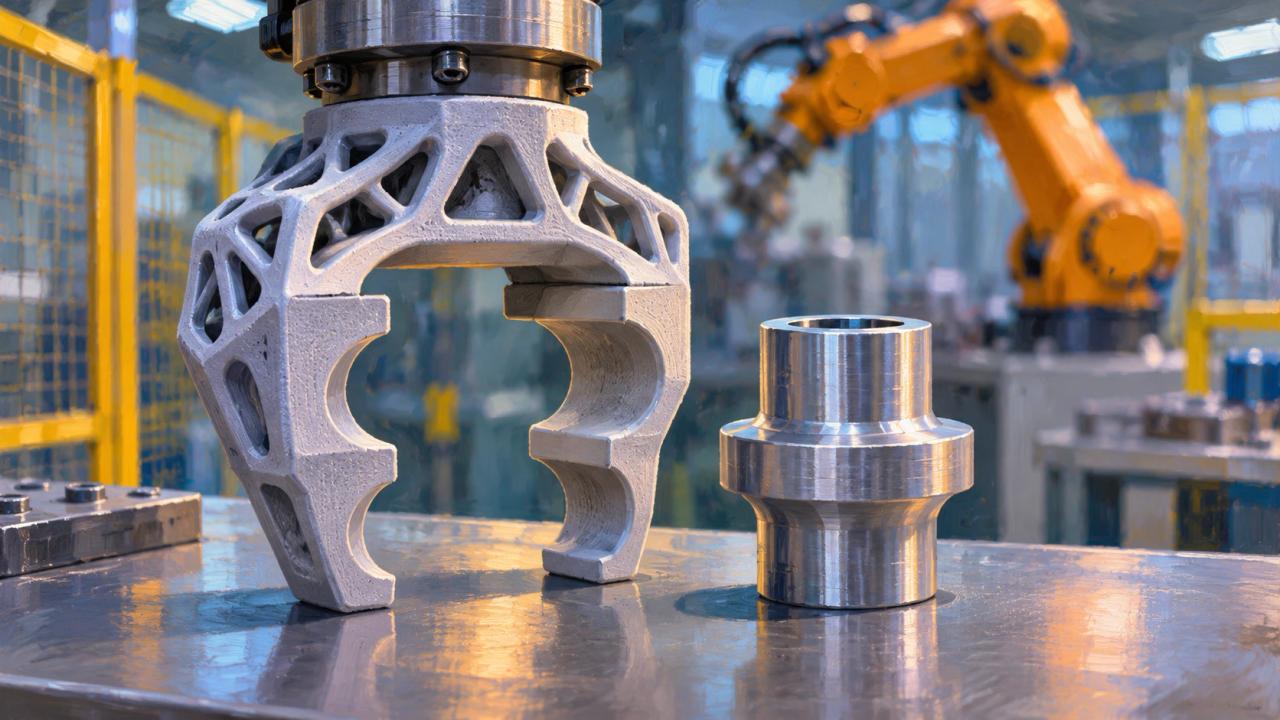
A robot’s usefulness can depend on the small tool that meets the product. A different shape or handling task can mean another gripper design, another engineering check and another component to manufacture.
Siemens and AGIBOT are demonstrating a way to connect those decisions. Their workflow starts with a description of an object and a task, then coordinates engineering software to create a gripper prepared for 3D printing.
For manufacturers producing many variants, the attraction is a shorter path between a new requirement and a usable tool. Making that path dependable would help factories change what they produce without repeating every engineering step by hand.
Announced on November 16, the demonstration is being presented at Formnext. Siemens is also developing a production cell with EOS and AM Solutions at its Erlangen Electronics Factory to connect printing, automation and finishing. Siemens announcement
From a description to an engineering check
The AI workflow selects a gripper type, adjusts its geometry in Designcenter, simulates it and checks the robot connection and handling. MCP, a protocol connecting AI tools with software functions, lets the agent coordinate the steps before preparing manufacturing data.
“The next step is production that can respond just as flexibly to this variety,” said Karsten Heuser, Siemens’ vice president of additive manufacturing. Siemens announcement
A longer engineering progression
Siemens has previously shown how software can reshape a gripper itself. Its September 2024 account described a battery gripper redesigned from 30 metal parts into five nylon parts, with company-reported weight savings of 90 percent. That earlier example used generative engineering to find a structure suited to the required loads.
The underlying technique, topology optimization, distributes material within a permitted design space according to engineering constraints. Siemens’ NX implementation keeps the resulting geometry editable and connected to later design operations. The new demonstration extends the ambition toward coordinating the sequence of work around the design. Siemens engineering background
The practical test will be whether successive designs can arrive on the factory floor with consistent fit, strength and handling performance. An adaptable factory needs that repeatability alongside the ability to make something different.