Google Puts Robot Setup Simulation and Control in One Workbench
An Antigravity plugin aims to shorten the path from an unpacked robot arm to a useful application.
Published November 18, 2026Intelligence / Robotics / Autonomous Systems
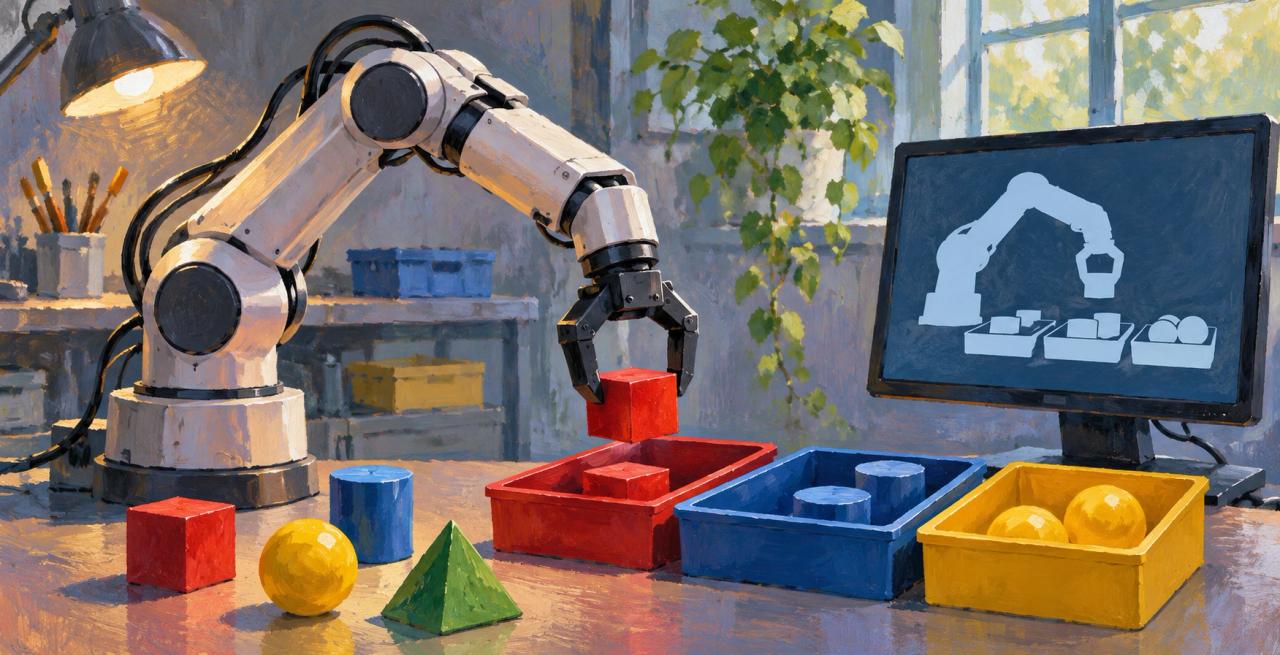
A robot arm becomes useful when it can do a particular job, in a particular workspace, reliably enough to repeat it. The software connecting those pieces can matter as much as the machine.
Google’s new Robotics plugin for Antigravity brings hardware setup, simulation and physical control into one development environment. Announced November 17, 2026, it works with Gemini 4 Hydrogen, a model introduced the previous week. [1]
Google’s demonstrations include sorting snacks from a conveyor and using two arms to fulfill soap orders. In the conveyor example, the company reports moving from a sketch through simulated testing to physical sorting in about an hour. [1]
For small teams, the potential attraction is a shorter route to testing whether automation fits a job. That could make modest experiments worth attempting before committing to a larger installation. This is the practical opportunity suggested by the workflow, rather than an independently measured economic result.
A rehearsal space for physical work
The plugin incorporates MuJoCo, an open-source physics engine designed to simulate articulated machines interacting with their surroundings. It models joint motion, contact and friction, allowing developers to examine how a proposed controller behaves. [2]
Its interactive tools can apply disturbances to simulated objects and show the resulting motion. That makes simulation useful for asking concrete questions: does a grasp hold, can an arm reach a location, and how does a controller respond when something moves? [2]
The next engineering question is how closely those simulated conditions match the real workspace. A useful evaluation would vary object placement, lighting and packaging, record intervention rates, and measure performance across sustained runs.
From a camera view to a control loop
Google says Hydrogen can interpret camera images, generate control code and adjust its actions using subsequent observations. The company calls the plugin a “one-stop robotics workbench.” Its examples span several arm types, but remain vendor demonstrations. [1]
The strongest follow-up would put this workflow in an independent team’s hands and document the complete journey: setup effort, failed attempts, corrections and repeatability. That would show how much of the distance between an idea and dependable automation the new workbench actually removes.