Ford Ships Michigan-Made Battery Cells for Fathom Pickup Prototypes
The shipment connects Ford’s Marshall cell factory with vehicle development in Kentucky. Pack production in Marshall is planned for 2027.
Published November 19, 2026Intelligence / Transportation / Advanced Surface & Marine
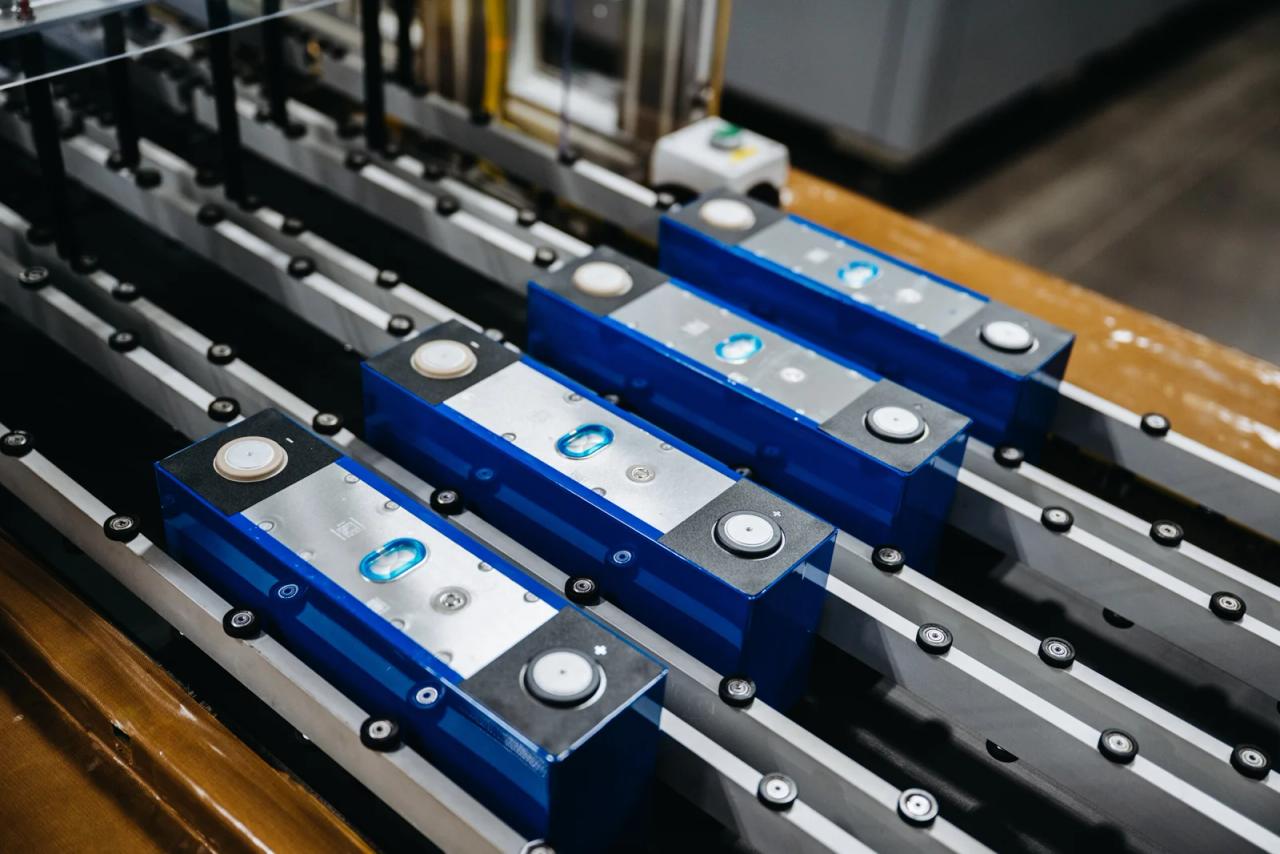
Ford’s first lithium iron phosphate battery cells from BlueOval Battery Park Michigan are headed to Louisville Assembly Plant to power Fathom pickup prototypes. The November 18 announcement puts output from the Marshall factory into the truck’s development program, before customer production.
Ford previously announced a $28,350 starting MSRP for the standard-range Fathom and plans to open preorders in early 2027. That price excludes taxes, title, registration and fees. The prototype shipment supplies batteries for development; it does not establish the cost of manufacturing a finished truck at sustained production volume.
The price advantage Ford is trying to bring home
The International Energy Agency found that in 2025 lithium iron phosphate packs cost more than 40% less per kilowatt-hour on average than nickel-manganese-cobalt packs. That comparison includes stationary storage, where LFP dominates and buyers can accept heavier packs. It does not establish a 40% saving on a Michigan-made pickup battery. It does show why an automaker would put a new factory and a new assembly process behind this particular chemistry. Cell cost matters most if the pack can deliver the range and power a customer wants within the vehicle’s weight and space limits. IEA, Global EV Outlook 2026
Ford’s quoted 40 cells a minute illustrates the next economic hurdle. A line running at that speed for an uninterrupted hour would assemble 2,400 cells. Production planners must subtract stoppages, rejects and cells held for quality checks before counting material available to the truck plant. The company has disclosed neither sustained saleable output nor manufacturing cost per usable kilowatt-hour for this shipment. Achieving a market-average cost advantage depends on how many good packs come out of the two factories, not simply on how fast the first cell line moves.
A pack that also supports the vehicle
Ford chose rectangular, or prismatic, cells and designed the battery pack to serve as a structural component of the pickup. Electrical and sensing connections are combined in a flexible circuit board, with compact power electronics integrated into the pack. The company says these choices reduce structural costs and simplify assembly.
The design addresses more than the price of the battery’s ingredients. A component that carries structural loads can reduce the need for separate supporting parts. Achieving that saving also requires the pack, its attachment points and the surrounding vehicle to be developed together.
In Louisville, the pack determines how people build the truck. Ford’s plant plan divides assembly into three sections. Crews can work on the front and rear cast structures while another group installs interior components above the battery, which becomes the floor. The sections come together once much of that work is finished. A worker fitting a dashboard can face the front structure while it is still open. The company has put $2 billion into reworking the Louisville plant around this approach. Ford’s account of the Louisville conversion
It also changes the cost of a pack being late or out of tolerance. A mismatch at the final join can hold up work already completed on the other sections. Early prototype packs give engineers a chance to check mechanical fit, wiring connections and the build sequence together. Ford’s stated target for the first quarter of 2027 is prototype builds using production-qualified parts. That is a more informative checkpoint for this manufacturing bet than the first shipment alone. Louisville production timetable
Making cells with licensed technology
Ford owns and operates the Marshall factory. Its arrangement with CATL is a technology license and services agreement; Ford controls the operation and employs the workforce. CATL supplies the licensed technology rather than holding the factory through a joint venture.
This gives Ford responsibility for turning the manufacturing process into repeatable output. A licensed design still has to be implemented through equipment settings, inspection, staff training and production controls at the receiving plant.
Ford says the Michigan assembly lines can deliver 40 cells a minute. It has not disclosed the shipment’s size or sustained output in this announcement. Line speed alone cannot establish annual production: operating hours, downtime and the proportion of cells meeting specifications also determine what a factory ships.
The company plans to have its Marshall battery-pack plant operating in 2027 ahead of vehicle launch. The current cells will support the prototype work that precedes that step.
Sources
Ford: first Marshall battery-cell shipment, November 18, 2026
Ford: Fathom pricing and preorder plans, August 6, 2026
Ford: ownership and CATL licensing arrangement, September 8, 2026