Orbital Data Centers Would Need a Continuing Supply of Launches
An orbital data center would need a continuing transport service as well as an initial ride to space.
Published November 16, 2026Briefs / Space Development / Base Development
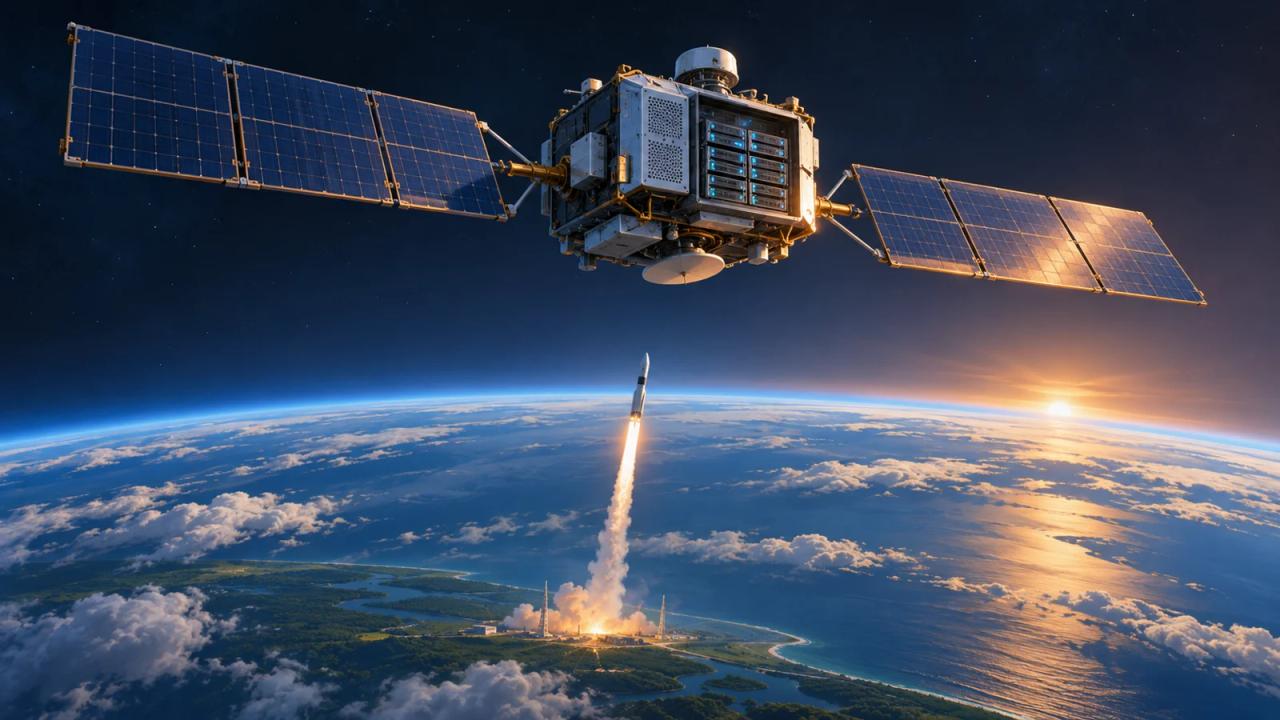
An orbital data center would need a continuing transport service as well as an initial ride to space. A new technology roadmap illustrates the scale: a hypothetical one-gigawatt installation could require 250 launches to assemble, followed by about 50 launches a year to replace aging hardware.
Those figures come from a reference scenario in the November 2026 Innovation for Cool Earth Forum roadmap on space-based data centers.
Longer-lived computers would need fewer replacement flights, while rapid hardware turnover would keep launch demand high.
Kathleen Curlee of Georgetown University’s Center for Security and Emerging Technology examines that relationship in the roadmap’s launch analysis.
Building the launch bill
The scenario uses 10,000 computing units, each rated at 100 kilowatts of computing load and weighing 2.5 metric tons. Together, they amount to one gigawatt of computing load and 25,000 tons of hardware.
At 100 tons delivered per launch, the initial deployment takes 250 flights. Giving each unit a five-year life produces an annual replacement requirement of one-fifth of the fleet, or 50 flights.
If construction were spread evenly across five years, assembly would also average 50 flights annually. That first construction program and the later replacement program are separate parts of the scenario.
A ten-year service life would halve the model’s annual replacement requirement to 25 flights. Whether computers could remain useful and reliable that long would depend on their design, operating environment and the workloads customers want to run.
Heat still has to leave the computers
Moving computing into space also changes the cooling system. NASA’s spacecraft thermal-control guidance explains that heat leaves an external surface through radiation; the surrounding vacuum provides no air for ordinary convective cooling.
Computers therefore need a path that moves heat from their components to radiating surfaces. Heat pipes, conductive structures and radiators are among the engineering tools available.
Radiators, heat pipes and supporting structures add hardware that must reach orbit with the computers, increasing the transport burden.