CATL will develop the SKYLA V30 aviation battery
An exclusive partnership puts the SKYLA V30 battery and aircraft teams on a shared development path
Published November 6, 2026Briefs / Transportation / Urban Air Mobility
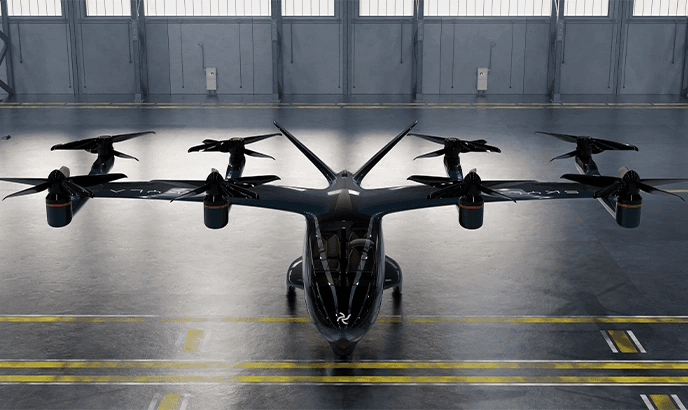
CATL will develop a custom aviation battery for Blue Vector’s SKYLA V30 electric aircraft under agreements announced on November 2. Blue Vector has selected CATL as its exclusive battery partner, linking a specialist aircraft program to the battery maker through both strategic and product cooperation agreements. 1
The SKYLA V30 is an all-electric tiltrotor designed to take off vertically and then cruise on its wings. The proposed six-seat aircraft is aimed at urban and intercity travel. Its appeal rests on making some journeys more direct without requiring a conventional runway. 2
A battery is central to whether that proposition can work. It must carry enough usable energy for the journey, deliver power at the rate the aircraft requires and remain within safe operating limits. Its weight competes with everything else the aircraft needs to lift. 3,4
The partnership is at the development and engineering-validation stage, according to Blue Vector’s accompanying statement. Battery chemistry, energy density, charging rate, price and delivery timing remain to be announced. Flight-range estimates will depend on the resulting battery’s performance. 1,5
An aircraft battery is a complete system
Energy and power describe different demands. Energy is the amount a battery can supply over time. Power is how quickly it can supply it. As NASA explains in its aviation battery research, storing enough energy is only part of the requirement. A pack must also discharge it fast enough to operate the aircraft. 3
Aircraft-level weight calculations must include the complete battery pack. Structure, thermal management and safety provisions affect its usable energy density, so engineers assess cells within the system that carries and protects them. 4
“The relationship between the cell and pack energy density is not linear, as is often assumed,” Jeffrey Chin and colleagues at NASA wrote in a 2021 engineering study. Their analysis found that the relationship depends on the pack’s requirements, chemistry and architecture. The study concerns aircraft battery design generally, rather than CATL’s newly announced project. 4
Custom development lets battery and aircraft engineers coordinate their designs. They can work from the same intended mission and physical constraints. The eventual evidence would need to show what the installed system delivers under relevant operating conditions, including its thermal behavior and safety margins. 4,5
The work ahead for SKYLA V30
Blue Vector says its ongoing work covers aircraft design, powertrain integration and flight control, alongside a software-defined aircraft architecture. Its November 2 statement also identifies system integration, engineering validation and airworthiness certification as essential stages for aviation battery technology. 5
The companies also intend to collaborate on joint research, standards and potential operating applications. Details of the battery test program will help establish the aircraft’s performance and readiness for service. 1,5
The agreement gives SKYLA V30 a named partner for one of its most demanding systems. Results from the integrated aircraft and battery will guide further development and the approvals needed for the intended service. Those results will determine how much of the proposed travel experience the engineering can deliver.
Sources
1. CATL announcement of the Blue Vector agreements November 2 2026 Chinese language
2. Skyla announcement describing SKYLA V30 November 2 2026 manufacturer description
3. NASA on energy and power in aviation batteries October 7 2022
4. Chin and colleagues Battery Cell to Pack Scaling Trends for Electric Aircraft 2021 NASA technical paper
5. Blue Vector statement on the CATL partnership November 2 2026