Claude and the Forty Year Mystery of Molecular Vaults
Anthropic’s researchers have assembled and enlarged molecular vaults from microbial and viral protein sequences. The work shows how AI’s contribution to biology is spreading from predicting structures to assisting entire investigations.
Published November 6, 2026Analysis / Frontier Tech / Synthetic Biology
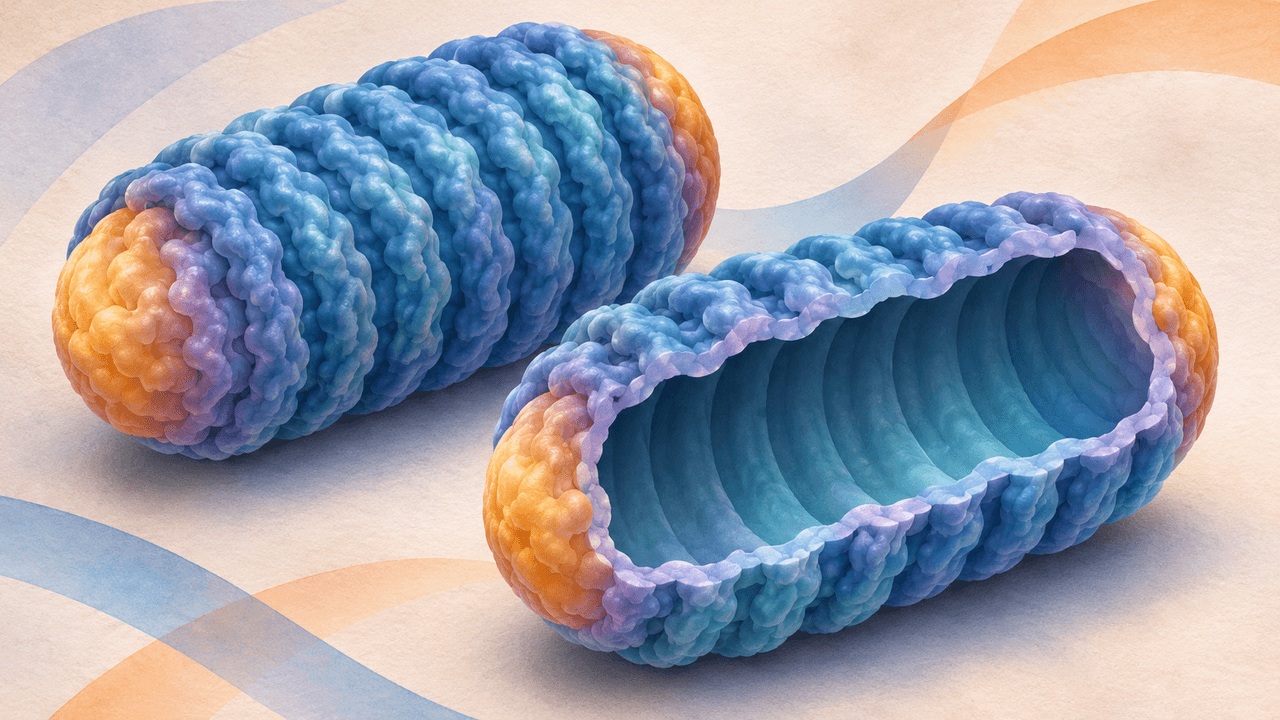
Forty years ago, researchers studying rat liver found tiny structures whose ribbed walls resembled the vaulted ceilings of a cathedral. They called them vaults. The particles were large by the standards of the cell, elaborately built and apparently widespread. Their purpose proved much harder to pin down.
Now Anthropic’s biology team has opened another route into that mystery. Working with Claude, researchers have shown that relatives of the main vault protein from bacteria and bacteria-infecting viruses can assemble into enclosed shells when produced in laboratory E. coli. They mapped one of those shells in detail and enlarged it by adding sections to its walls.
Announced November 4, 2026, the findings appear in a preliminary manuscript that Anthropic says it has submitted to bioRxiv. They offer a new experimental system for investigating vaults, alongside a case study in how AI is changing the practical work of biological research.
A mystery with a larger family
Nancy Kedersha and Leonard Rome described the original vault particles in 1986. Their paper documented an unusual combination of proteins and RNA, with structures appearing in several mammalian cell types. The question of their function remained open.
Later work explored possible connections to cellular transport, immunity and drug resistance. A complete biological explanation has remained elusive.
The familiar mammalian vault has a shell built from 78 copies of major vault protein, arranged into two halves that meet around the middle. Each copy contributes a strip of wall and part of an end cap. Together, they form a hollow container.
Hints of a larger family have accumulated for years. A 2023 preprint by Thiago Santos and colleagues identified candidate major vault proteins in bacteriophages, the viruses that infect bacteria. Research published this March also identified related proteins in Asgard archaea, another branch of microbial life.
Anthropic’s team pursued the experimental question those discoveries raised: could these distant relatives actually build vaults?
Its survey covered approximately 15 billion protein sequences. Related proteins appeared across 29 bacterial and four archaeal phyla, although they were rare within sequenced species. The researchers then selected candidates for laboratory testing.
Seven produced vault-like shapes under negative-stain electron microscopy. Cryo-electron microscopy confirmed characteristic vault architecture in four examples from bacteria and phages. One of those, called Bc1, had looked ring-like in the earlier imaging, illustrating how the screening method could miss intact particles.
The team concentrated its structural work on L05, a phage-derived protein that assembled into well-formed shells.
Ninety six pieces form a closed shell
L05 builds a vault from 96 protein copies, with 48 in each half. Its overall shape is shorter and wider than the mammalian version, and its interior holds roughly 25 percent more volume.
The end caps reveal an intricate piece of molecular construction. Identical protein chains follow different paths as they approach the tip. Some turn back earlier; others extend farther inward. Their overlapping arrangements close the shell in tiers.
The researchers tested the importance of contacts between neighboring proteins. Even a single amino-acid substitution could disrupt assembly, leaving open, flower-like structures or aggregates.
They also tried expanding the walls.
L05 normally has seven repeated wall sections in each protein chain. Adding two more produced a larger closed vault, increasing its internal volume by approximately 20 percent over ordinary L05. That puts the engineered version’s capacity at roughly 50 percent above the human vault used for comparison.
The experiment establishes a practical way to adjust the dimensions of a protein container. It also supports the idea that duplication of repeated sections could help vaults change shape and size over evolutionary time.
How AI has changed protein research
The vault study arrives after several major advances that address different parts of the same scientific challenge.
AlphaFold2 made accurate structural prediction widely useful. Its landmark 2021 paper reported performance competitive with experimental structures for a majority of the targets in the CASP14 assessment, a demanding test using structures withheld from participants.
A protein’s amino-acid sequence could often yield a useful three-dimensional working model, helping scientists identify important regions, interpret observations and decide which experiments to run.
The accompanying human-proteome study extended those predictions across much of human biology, with confidence varying by region. Researchers generated predictions covering 98.5 percent of human proteins. Confident predictions covered 58 percent of their amino-acid residues; 36 percent of all residues received very high confidence. The benefit was broad access to structural information, with explicit uncertainty attached to the less reliable regions.
AlphaFold3 extended prediction to combinations of proteins, DNA, RNA, small molecules and other components. Its 2024 paper reported improved performance across several interaction benchmarks. This brought more of the molecular encounters that matter in biology within reach of computational investigation.
Protein design has advanced alongside prediction. RFdiffusion, introduced in 2023 by researchers including Joseph Watson, David Juergens and David Baker, generates candidate protein structures around specified goals. In that workflow, another model, ProteinMPNN, designs amino-acid sequences for the proposed structures.
The researchers experimentally characterized hundreds of designed assemblies, metal-binding proteins and binders. One particularly clear result was a designed protein attached to influenza haemagglutinin: its cryo-EM structure closely matched the computational design.
These developments have substantially expanded the questions laboratories can tackle. Scientists can explore structural possibilities, propose new molecular shapes and choose promising candidates before committing to synthesis and testing. Physical measurements then test the predicted or designed behavior.
Claude’s role in the vault project spans the surrounding research work. The manuscript credits various Claude models with writing the code and conducting the computational analyses under human direction. AlphaFold2 itself supplied a predicted protein model used in building the experimental L05 structure.
The project therefore brings several kinds of assistance together: specialized models for molecular structure, established software for processing microscope data, and a general-purpose AI system helping researchers use those tools and move between stages of the investigation.
A faster workflow with mistakes along the way
Researchers selected candidate proteins; Claude helped prepare the corresponding DNA designs and supported experimental and computational work.
Anthropic reports that an optimized isolation method reduced preparation from roughly three days to about 90 minutes. A first structural model followed within 34 hours of processing, with final maps taking about a week. Those comparisons are the team’s estimates, and the microscopy analysis used hundreds of GPUs in parallel.
The account also records costly errors. An unsuitable growth-medium recommendation delayed the project by two weeks, and a processing mistake produced a flawed structural map.
Throughout the project, scientists chose experiments, challenged recommendations, assessed images and corrected analyses.
Researchers led by Elisabetta Galbiati published a vault-isolation method using size-exclusion chromatography in 2018. Anthropic’s work develops that established approach.
AI helped the team handle a broad set of computational and methodological tasks while pursuing an unfamiliar protein assembly. The reported acceleration reflects contributions from Claude, computing resources, existing scientific software and the researchers’ decisions. A controlled comparison would be needed to isolate Claude’s contribution.
The next question is inside the vault
One feature of L05 could eventually connect its architecture to its biological job.
The structural maps show unexplained material in pockets along the inside wall. A computational comparison against approximately 25,000 molecules suggested coenzyme A, or a related compound, as a possible fit.
Coenzyme A helps cells handle chemical groups in many metabolic reactions. Establishing that it binds these vaults could provide a useful lead. Its identity remains unconfirmed.
Another basic question concerns where these assemblies occur. The team produced the particles in laboratory E. coli; assembly in their original biological settings remains untested.
For biotechnology, the appeal is a hollow protein shell whose dimensions can be adjusted. Earlier vault research has explored molecular encapsulation and delivery. The new study adds microbial candidates that can be produced and modified in a familiar laboratory organism. Useful applications will depend on further work establishing how cargo can be loaded, protected and released.
The work also opens new experiments in fundamental biology. Researchers now have additional versions of a mysterious cellular structure, a detailed picture of how one closes, and a way to alter its size.
AI has helped make those questions experimentally approachable. Discovering what vaults actually do will require the next round of observations, hypotheses and tests.
Sources
Anthropic | Investigating vault particles with Claude | November 4 2026
Kedersha and Rome | Original vault discovery | Journal of Cell Biology 1986
Santos and colleagues | Candidate viral major vault proteins | 2023 preprint
Jumper and colleagues | Highly accurate protein structure prediction with AlphaFold | Nature 2021
Galbiati and colleagues | Vault purification and endocytic uptake | 2018
Sources · 10
- https://www.anthropic.com/research/investigating-vault-particles-with-claude
- https://www-cdn.anthropic.com/76e55fbe85697afbaae16b839498dc00797dec30.pdf
- https://doi.org/10.1083/jcb.103.3.699
- https://doi.org/10.1101/2023.11.10.566534
- https://doi.org/10.1038/s41564-026-02273-y
- https://www.nature.com/articles/s41586-021-03819-2
- https://www.nature.com/articles/s41586-021-03828-1
- https://www.nature.com/articles/s41586-024-07487-w
- https://www.nature.com/articles/s41586-023-06415-8
- https://pubmed.ncbi.nlm.nih.gov/30036602/