Yarwun’s heat-battery study aims to turn cheap electricity into steady steam
ARENA is backing engineering for a proposed 360-MWh heat battery at Rio Tinto’s refinery. The test is whether electricity bought at favourable times can deliver dependable steam at a workable cost.
Published October 25, 2026Intelligence / Energy / Advanced Battery Tech
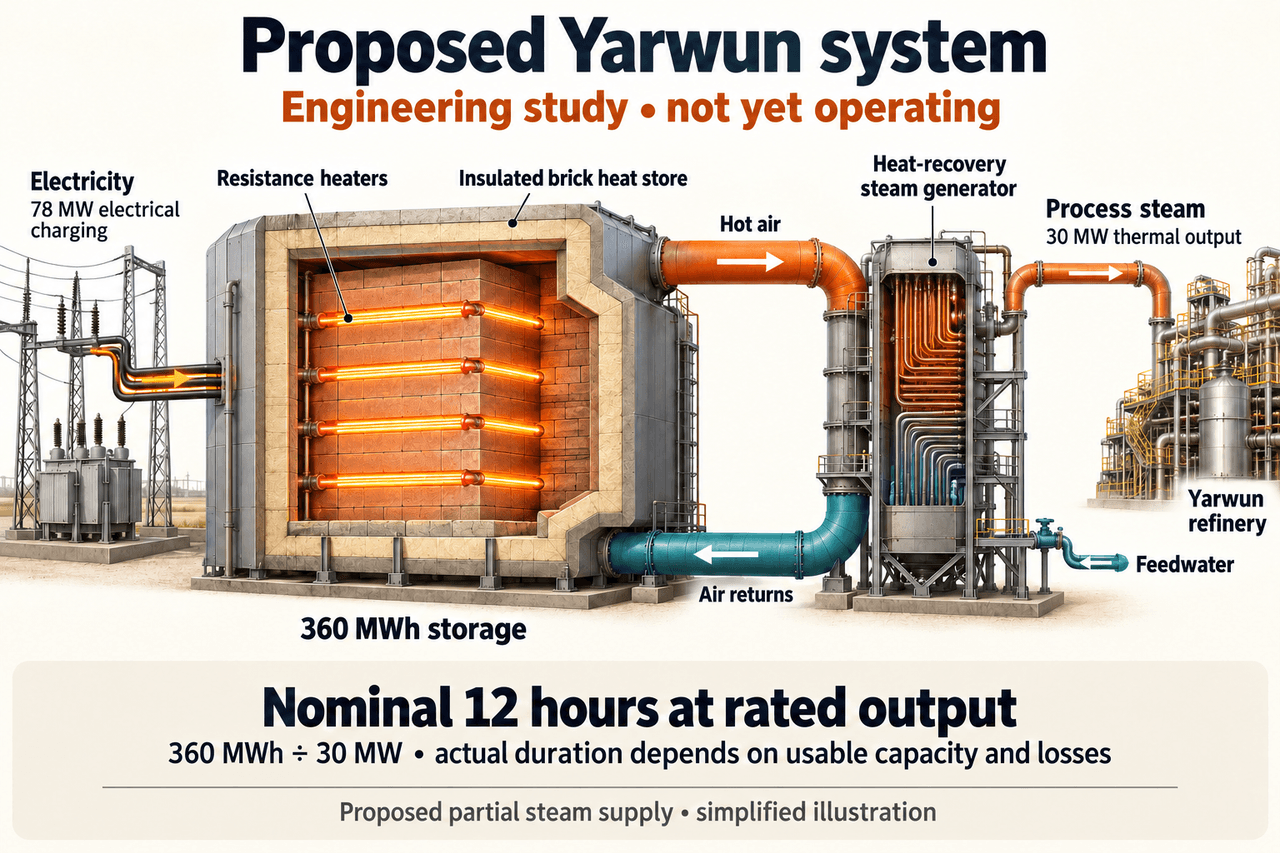
A factory needs steam when production calls for it. Electricity can be cheapest on a different schedule. A heat battery offers a way to separate those two clocks: buy power during favourable hours, store it as heat, and draw on that store while the factory keeps working.
ARENA’s October 21 announcement backs front-end engineering and design for a proposed 360-megawatt-hour Rondo Energy heat battery at Rio Tinto’s Yarwun alumina refinery near Gladstone, Queensland. It is not operating; construction still requires further decisions.
Rio Tinto expects the feasibility study to take about 12 months. It will match ARENA’s A$3.6 million study contribution. Successful study results and a decision to proceed would unlock up to A$38 million in ARENA deployment support; a further A$33.3 million is conditional support for specified risks, including electricity costs and contingency. Those stages matter: the announcement funds the work needed to establish a viable project, rather than confirming a completed commercial case.
From electrical heaters to a steam pipe
The basic conversion is familiar. Rondo’s technology description uses electrical heating elements to warm stacks of heat-resistant bricks. The bricks retain the energy inside an insulated system. When heat is needed, air passes through the hot stack and carries energy out. Controlling that airflow regulates heat delivery, allowing the electricity intake and the heat output to follow different schedules.
For Yarwun, ARENA describes bricks at around 1,100°C and hot air feeding a heat-recovery steam generator. That temperature describes the store, not the steam supplied to the refinery. The proposed system would supply process steam for a site where three coal boilers and a gas-fired cogeneration plant currently serve the digestion process. Electricity becomes useful heat without first being converted back into electricity.
The announced ratings are 78 MW of electrical charging power, 30 MW of thermal discharge power and 360 MWh of storage. Megawatts measure energy flow; megawatt-hours measure stored energy. Simple division gives a nominal 12 hours at rated output; a full day requires 720 MWh. Usable capacity and losses would affect actual performance. Continuous service needs charging windows that satisfy both daily energy requirements and the gaps between charges. These calculations are scale checks, not performance guarantees.
The electricity bill decides more than the efficiency headline
The commercial comparison is the cost of useful steam delivered to the process. For the battery, that includes purchased electricity, losses, equipment, financing, maintenance and integration. For the existing system, it includes fuel and the costs of operating the boilers. A useful assessment must distinguish fuel expenditure that can actually be avoided from costs that remain if conventional equipment is retained for backup.
The distinction between market prices and delivered electricity costs is especially important. The Australian government’s guide for large energy users explains that bills include network charges, transmission losses and other costs alongside energy. Network charges can include both consumption and demand components. A low wholesale price therefore does not establish the price Yarwun would pay to charge. Its electricity contract, network tariff and permitted demand would shape the opportunity.
Charging quickly can capture a short inexpensive window, but it also requires adequate electrical capacity. At an existing refinery, the study must establish what the connection, transformers, switchgear and controls can accommodate, and what upgrades would cost. ARENA’s industrial thermal-storage guide treats electrical infrastructure and commercial assessment as explicit steps alongside process suitability and technology selection. The charging connection belongs in the business case from the outset.
Utilisation creates another trade-off. Spreading equipment costs over many hours of useful steam production can improve the economics. Restricting charging to only the very cheapest intervals may demand more charging capacity or leave too little energy available. Buying power in additional hours can sustain output but raises the average charging price. ARENA’s process-heat assessment explains the underlying tension between operating hours, time-varying electricity prices and capital costs. A single attractive spot-price interval cannot settle it.
Nor should today’s price pattern be assumed permanent. In its October 23 market update, AEMO reported that increased grid-battery activity contributed to lower evening peak prices. Storage is already changing when electricity is consumed and supplied. An industrial project needs an electricity strategy that remains workable as those patterns evolve.
A useful test at a limited share of the refinery
Rio Tinto says the proposed system could supply around 5% of Yarwun’s steam requirements and cut onsite Scope 1 emissions by about 67,000 tonnes of carbon dioxide annually. Those are projected outcomes, not measured savings. The limited share also makes clear that this project would replace part of the refinery’s fossil-fuel heat supply rather than electrify the entire operation.
The next evidence should be practical: the completed study, an investment decision, an agreed electrical connection and a credible integration plan. After construction and commissioning, steam reliability, charging costs, maintenance requirements and actual fuel displacement would show whether the economics survive contact with daily production. ARENA’s project plan includes 36 months of trial operations and knowledge sharing, providing a route to evidence that other industrial sites could use.
Yarwun is worth watching because the proposed benefit is concrete. A refinery could keep its steam supply steady while changing when it buys part of the energy behind it. The value would come from dependable heat, avoided fuel use and a manageable electricity bill. The engineering study is where those pieces must first fit together.
Sources · 8
- https://arena.gov.au/news/demonstrating-a-new-pathway-for-electrifying-industrial-heat-at-scale/
- https://www.riotinto.com/en/news/trending-topics/arena-funding-thermal-energy-storage-study-yarwun
- https://www.rondo.com/how-it-works
- https://arena.gov.au/projects/rio-tinto-yarwun-thermal-energy-storage-industrial-demonstration-project/
- https://www.energy.gov.au/business/energy-management-business/large-energy-users/energy-procurement/understand-your-retail-energy-bill
- https://arena.gov.au/knowledge-bank/thermal-energy-storage-for-industrial-process-heat-a-practical-guide/
- https://arena.gov.au/assets/2019/11/renewable-energy-options-for-industrial-process-heat.pdf
- https://www.aemo.com.au/newsroom/media-release/qed-q3-2026