ORNL and Plasmatreat test a thin corrosion barrier for high-strength aluminum
A plasma-deposited coating limited damage in a 962-hour salt-spray experiment; its comparison with anodizing came from a separate laboratory test.
Published November 3, 2026Intelligence / Materials / Nanomaterials & Graphene
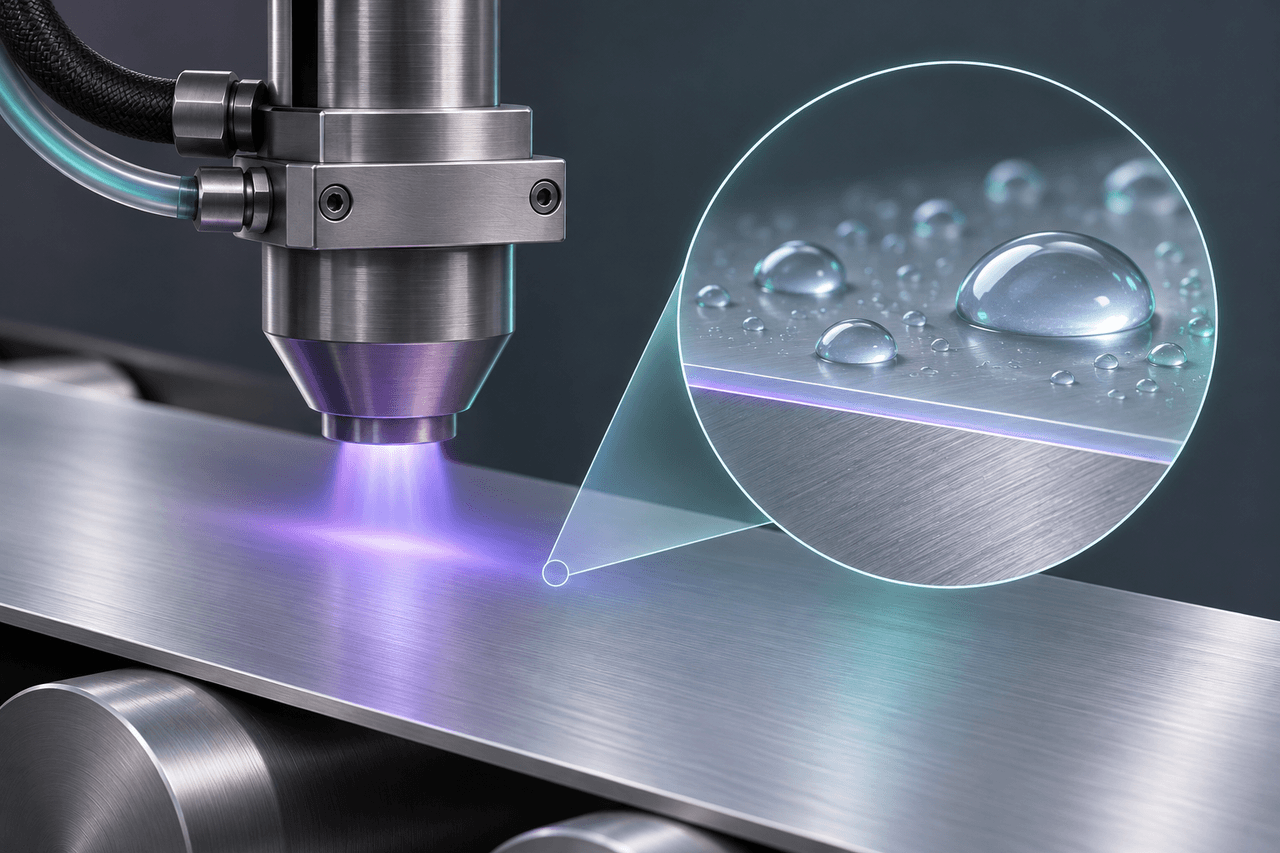
Researchers at Oak Ridge National Laboratory in Tennessee and Plasmatreat USA in Hayward, California, have reported a thin protective coating for 7075-T6 aluminum, a high-strength alloy being studied for lightweight transport structures. The study, published October 31 in npj Materials Degradation, found substantially less salt-spray damage on coated specimens than on bare aluminum after 962 hours. Jiheon Jun, Yong Chae Lim and colleagues also tested how the coating resisted localized corrosion under controlled electrical conditions.
The manufacturing attraction is a process that operates in open air. A plasma jet first cleans and activates the surface, then deposits a silicon-containing organic precursor as a barrier film. That film makes it harder for water, oxygen and chloride ions to reach the metal. Atmospheric-pressure processing avoids a vacuum chamber and could fit continuous production. The paper establishes laboratory coating and corrosion results; the proposed production advantage still needs validation on manufacturing lines.
The researchers produced three coating conditions with representative thicknesses of about 0.78, 1.38 and 1.63 micrometers. They selected the thickest, called P/c, for the salt-spray comparison. After exposure, the bare specimen showed extensive attack across its exposed area, while the intact coated specimen showed one localized attack. A deliberately scratched coating also limited corrosion spreading from the scratches to less than one millimeter perpendicular to them. The authors treat that observation as qualitative evidence of coating integrity; direct adhesion-strength measurements remain outstanding.
The anodizing comparison used separate electrochemical measurements in a 3.5% sodium-chloride solution. Under the selected 60-millivolt anodic overpotential, which imposed an electrical stress that sustained corrosion in bare aluminum, all four P/c tests maintained low currents. The authors describe performance as potentially comparable to an approximately 19-micrometer anodized layer within this limited dataset. The 962-hour salt-spray experiment compared P/c-coated specimens with bare aluminum; the anodized benchmark belongs to the electrochemical test.
The broader technology already has industrial uses. Plasmatreat markets atmospheric-plasma corrosion coatings that can treat selected areas of metal components and operate within production lines. Its published product example uses a different aluminum casting alloy and a different salt-spray protocol. The new study adds evidence for 7075-T6, whose corrosion behavior depends on its microstructure and surface condition. An existing plasma-coating business gives manufacturers a possible equipment route, while the exact alloy and treatment still require their own qualification.
For vehicle designers, the practical question is whether protection can preserve the advantages of a lightweight alloy through joints, assembly and years of exposure. Oak Ridge’s study places the work in the context of corrosion between dissimilar materials, where a strong metal can become vulnerable at its connections. Our assessment is that coating consistency around those connections would be an important requirement for production. Component geometry, surface preparation and subsequent assembly would all belong in a production trial.
The exposure duration also needs a clear boundary. ASTM’s description of salt-spray testing emphasizes controlled comparisons and warns that extrapolation to natural environments requires corroborating long-term exposure evidence. The 962-hour result supports protection under the reported chamber conditions. Buyers would still need evidence covering their own service environment, wear, damage and repair procedures before assigning a useful-life or maintenance benefit to the treatment.
The paper provides process settings but leaves coating costs, production throughput and a line-level economic comparison unmeasured. The precursor formulation is proprietary, and the underlying datasets are available on reasonable request subject to intellectual-property restrictions. For a manufacturer considering a pilot, the next useful evidence would pair repeatable corrosion protection on representative components with measured cycle time, consumable use and the cost of inspecting or reworking imperfect coatings.