Walmart’s Robotics Expansion Makes Scale the Next Test
A roughly $6 billion commitment across 25 distribution centers puts the focus on repeatable operating results.
Published October 31, 2026Intelligence / Robotics / Autonomous Systems
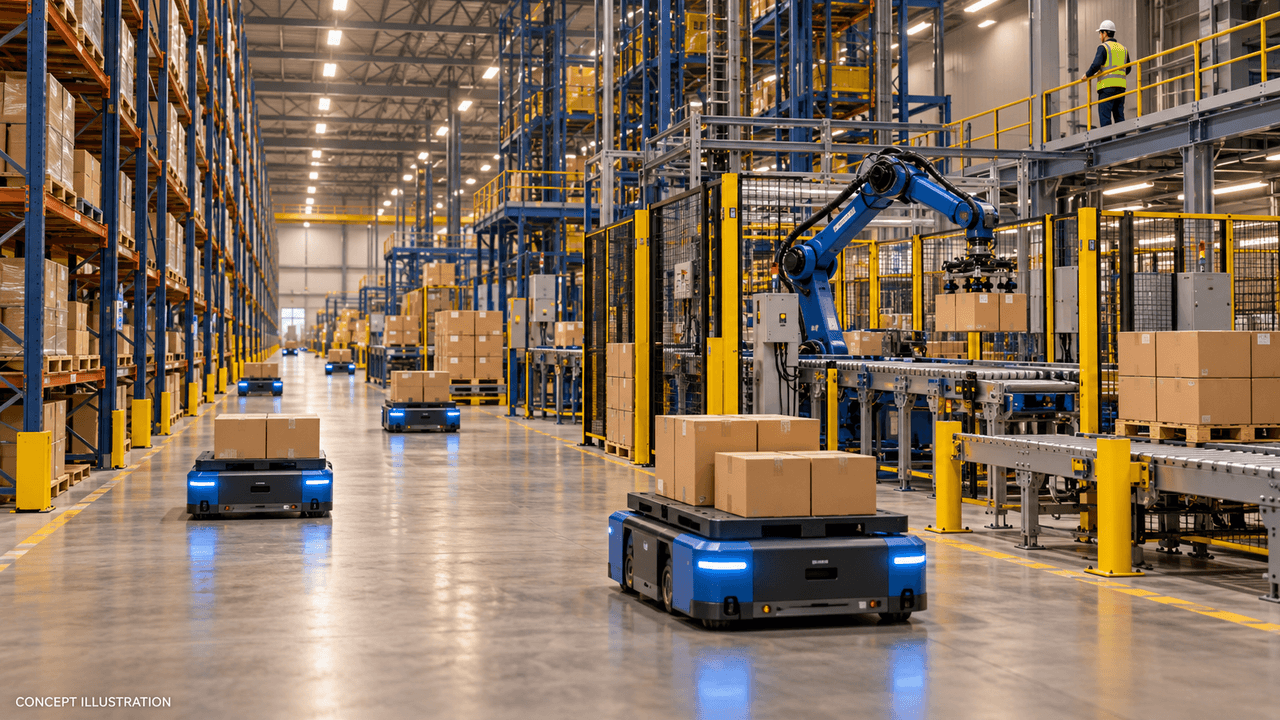
Warehouse robotics becomes economically interesting when a system can keep moving an unpredictable mix of goods through a busy building, day after day. Walmart’s expanded agreement with Symbotic brings that test to a larger part of its distribution network.
Announced October 29, the agreement includes an initial commitment of approximately $6 billion over several years and additional automation capabilities for 25 U.S. regional distribution centers. The companies say the work will support more storage, upstream e-commerce inventory management and improved product flow. [1]
The significance is deployment scale. A large buyer is extending an established relationship and committing capital to the physical systems behind its retail business. The announcement gives much less visibility into site-by-site economics: spending, installation schedules, sustained throughput and measured savings are different pieces of evidence.
For a warehouse operator, the meaningful comparison includes the cost of installing and maintaining equipment, training staff, handling exceptions and keeping goods moving during a breakdown. Faster movement in one part of a building only helps overall productivity if receiving, storage, picking and shipping can keep up.
That makes this an operating-results story to follow. A convincing next report would show how completed sites perform against comparable operations, including service quality and total cost per case. The October agreement establishes a substantial commercial commitment; the economics of the new rollout will emerge as facilities are delivered and operated.