DTL Commits to 75 Customer Owned Driverless Trucks With Kodiak
A binding agreement would put Kodiak's driving system into DTL's own fleet for a per-mile fee. Deliveries, route readiness and sustained operations remain separate milestones.
Published October 30, 2026Intelligence / Robotics / Autonomous Systems
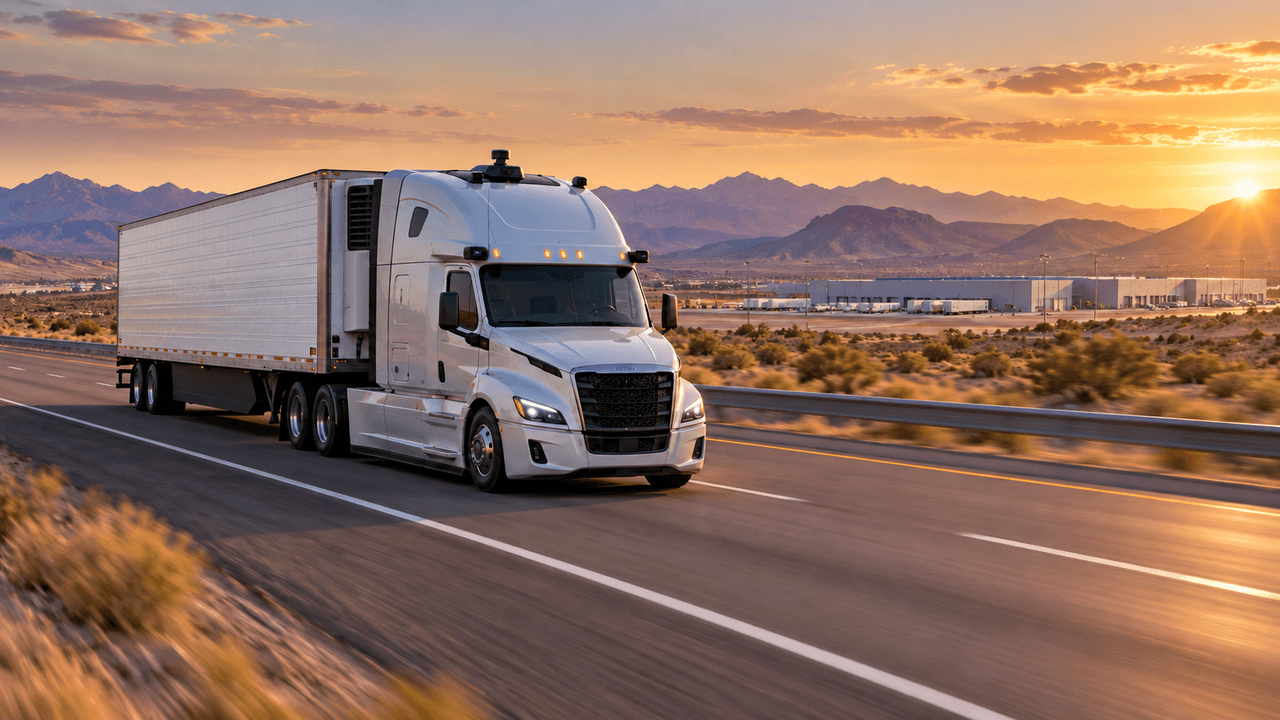
The freight carrier would own the trucks; the autonomy supplier would be paid as they travel. That is the commercial arrangement behind an October 28 agreement between Kodiak AI and California-based DTL Transport (DTL) covering 75 planned driverless trucks. Kodiak describes the commitment as binding. The announcement establishes a customer order for a service model, rather than 75 trucks already working without drivers. 1
Under the arrangement, DTL would pay a per-mile fee to use the Kodiak Driver, the autonomous-driving system installed in its vehicles. The carrier retains the fleet and freight business while buying the driving capability as an ongoing service. That could let an established operator adopt autonomy without becoming a developer of the software. Its return would still depend on the complete operating cost, including vehicle ownership, support and the miles that can actually be served.
The companies already have a narrower operational relationship. In September, Kodiak reported hauling perishable goods for DTL between Fresno and Los Angeles under a California heavy-duty autonomous-vehicle testing permit. The September announcement expressly described testing. It is evidence of freight carried in that program, not proof that the newly committed interstate fleet has been delivered or cleared for driverless operation. 2
The planned initial lanes link Dallas with El Paso and Dallas with Atlanta, according to Kodiak. The company says it has tested those lanes, but its October announcement still treats closing the long-haul safety case and launching Texas driverless operations as future work. Those steps must turn a tested route into a service that can carry customer freight within defined operating limits. 1
A safety case is an organized argument, supported by evidence, that a system can operate acceptably within specified conditions. Those conditions matter for a truck expected to handle changing traffic, construction and weather. Kodiak's quarterly filing warns that expanding from off-highway commercial service to highway operations and broader conditions remains challenging. An industrial deployment cannot by itself establish readiness for an interstate freight lane. 3
For grocery logistics, the useful outcome would be dependable delivery capacity over a defined route. Removing an in-cab driver from an eligible leg might change scheduling possibilities, but freight still has to be loaded, inspected, dispatched, received and handled when something goes wrong. Delays at those handoffs can erase time gained on the road. Neither the fleet count nor the per-mile contract establishes lower total costs or improved road safety.
Progress can be assessed through delivered trucks, the operating conditions permitted on each lane and sustained customer service records. Reporting should distinguish driverless miles from miles with a safety observer and account for interruptions and support requirements. The agreement makes the commercial commitment more concrete. Its value to DTL will become clearer when the contracted capacity turns into repeatable freight movements.