Rendezvous Robotics Funds a Test of Spacecraft That Assemble in Orbit
A $20 million seed round supports a seven-tile mission targeted for 2028, building on earlier enclosed microgravity experiments.
Published October 31, 2026Briefs / Space Development / Base Development
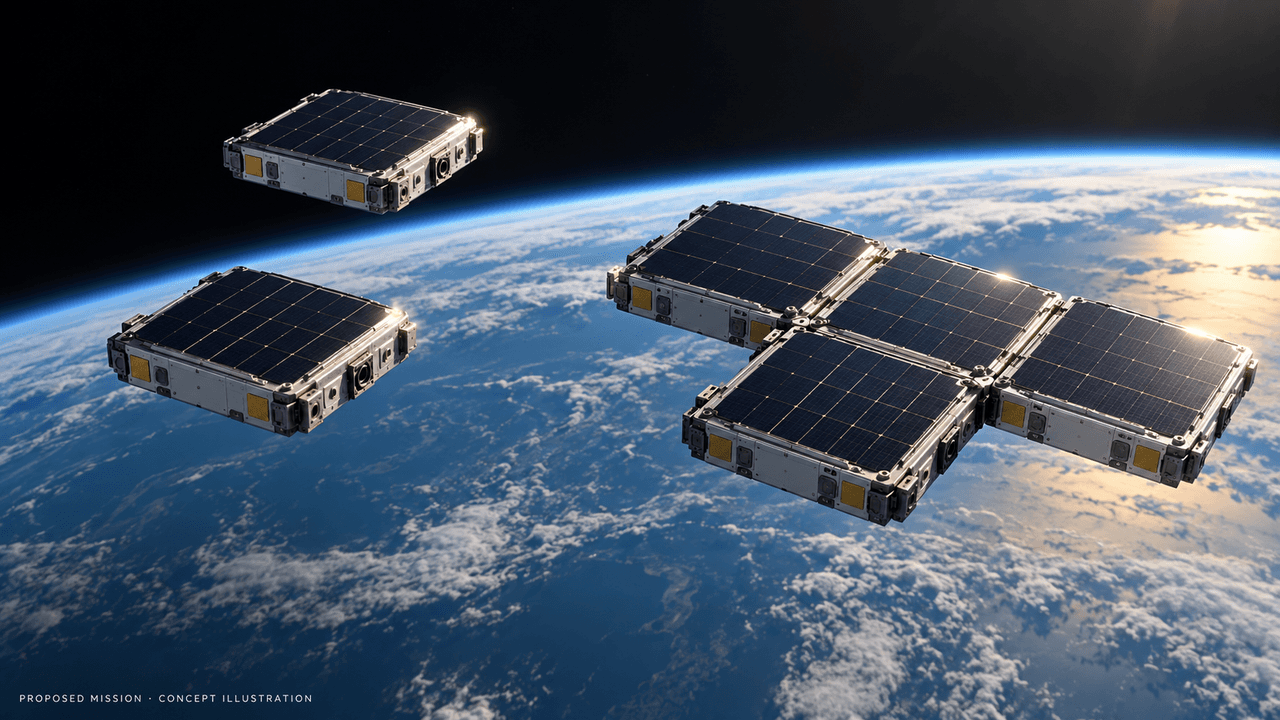
A rocket’s fairing limits the size of the spacecraft packed inside it. Rendezvous Robotics is pursuing another route: launch separate modules, then connect them in orbit into a larger structure.
The company announced a $20 million seed round on October 28, led by MaC Venture Capital and Toyota Ventures. Its planned 2028 demonstration would have seven independently operating spacecraft tiles join into one spacecraft, separate and assemble again in another arrangement. The mission is targeted no earlier than April 2028. [1]
The project builds on TESSERAE research that has already flown in microgravity. A separate 32-tile experiment is scheduled for the International Space Station in December 2026. That enclosed experiment and the proposed free-flying spacecraft involve different stages of development. [1]
The architectural promise is flexibility after launch: structures could grow or change configuration rather than remain limited to their launch arrangement. The next evidence will be controlled assembly between independently operating modules in space.