AGIBOT Proposes Measuring Robots by Useful Work Completed
Worken combines active machines, autonomous working time and task output. It is a vendor-proposed framework, rather than an adopted industry standard.
Published October 30, 2026Briefs / Robotics / Humanoid Robotics
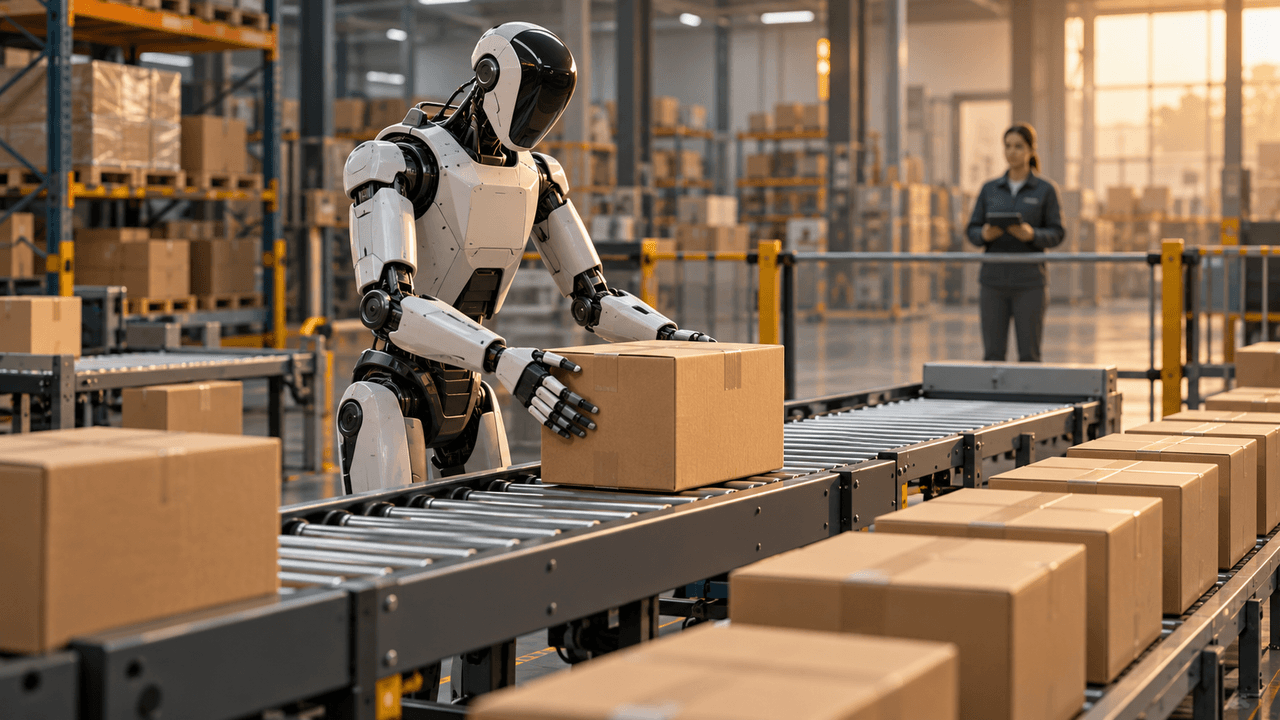
A delivered robot is not necessarily a productive robot. AGIBOT introduced Worken on October 29 as a proposed measure connecting the number of active robots, hours of autonomous work and an output-efficiency ratio against a defined task benchmark. The company calls the result effective intelligent work hours and intends to refine the framework through deployment data. 1
The attraction is to count acceptable output rather than inventory or powered-on time. Comparability depends on the details: what qualifies as autonomous work, how rejected output is treated and which task sets the reference rate. The National Institute of Standards and Technology (NIST) has separately developed task-based robot measurement methods using specified objects, procedures and statistical analysis. That work illustrates the measurement discipline needed; it is not an endorsement of Worken. 2 3
Worken remains AGIBOT's proposal, with no industry-standard status established by the announcement. Independent users would need reproducible definitions and data before comparing vendors or tasks. Even a sound output measure would need to be paired with human support, maintenance, energy and ownership costs to assess whether a deployment pays for the useful work it delivers.