An Electric-Plane Maker's Sales Are Rising. Building the Planes Is the Hard Part.
BETA Technologies raised its revenue forecast. Its own targets show how far it, and its rivals, still have to go to turn electric-aircraft development into repeatable production.
Published November 4, 2026Analysis / Transportation / Urban Air Mobility
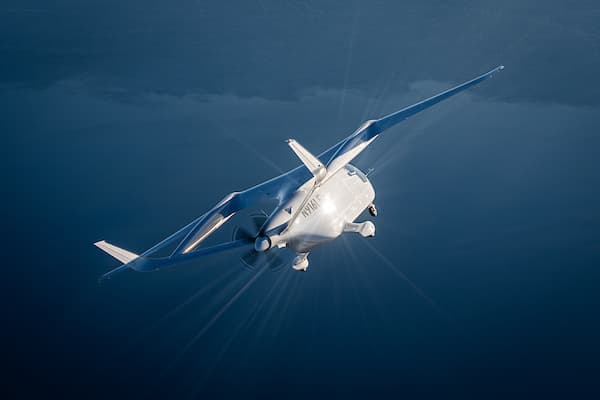
BETA Technologies, a Vermont company that builds electric aircraft and the chargers that power them, said on November 3 that its revenue nearly doubled in the third quarter from a year earlier, to $17.7 million. It raised its forecast for the year to $52 million to $57 million, from $42 million to $50 million. BETA's results
By the standards of aviation, those are small sums, and most of the money came from services. They brought in $12.5 million, about 70 percent of the total. Product sales brought in $5.2 million; that category includes equipment such as propulsion systems, components and chargers, so it is not a count of airplanes sold. BETA says service revenue comes primarily from engineering, consulting and other customer arrangements, and includes charging fees. BETA's quarterly filing
The more revealing number was on a slide in the company's investor presentation. BETA put its maximum demonstrated aircraft production rate at half a plane a month. Its goal for the end of this year is 4.5 a month — a ninefold increase, with less than two months left on the calendar. BETA's presentation, page 8
That gap, between what the company has demonstrated and what it aims to achieve, sits at the center of the electric-aviation business. BETA and its rivals — Joby Aviation, Archer Aviation and Britain's Vertical Aerospace — have spent years developing battery-powered aircraft. In the meantime, each is building a different kind of business around its flight program. Their latest accounts reveal how much of the money coming in depends on engineering work, existing passenger services and airport operations while the aircraft programs advance.
Two aircraft, an engine and a network
BETA is pursuing several programs at once. The CX300 takes off and lands on a runway like a conventional airplane. The A250 is an eVTOL — an electric vertical takeoff and landing aircraft — designed to rise and descend like a helicopter. BETA is also seeking certification for an electric engine, the H500A, and runs a charging network that other companies' aircraft can use. BETA's program update
That spread gives BETA several ways to earn money and build flying experience while its aircraft move through Federal Aviation Administration certification. It also means its headline figures blend unlike things, and they reward a closer look.
Revenue from somewhere else
Across the group, the revenue figures describe businesses broader than selling electric aircraft. Joby reported $38.6 million for the quarter that ended June 30, including $36.2 million from Blade, the passenger-flight business it acquired in August 2025. Archer reported $5 million, principally from its Hawthorne airport and related operations in California. Vertical had no revenue in the first half of the year. Joby's filing, Archer's results, Vertical's interim filing
The comparison has limits. BETA's quarter ended September 30; Joby and Archer have not yet reported third-quarter results. Joby is scheduled to report after markets close on November 4, and Archer on November 9. Vertical's latest financial package covers the six months through June and includes June-quarter results. Joby's reporting schedule, Archer's reporting schedule
Losses, and the cash to cover them
All four reported substantial quarterly losses. BETA's third-quarter net loss was $119.1 million, less than half the second-quarter losses at Joby, $245.4 million, and Archer, $263.2 million. Vertical lost £42.1 million in the three months through June. Those totals include accounting items that involve no cash; they cannot be read as quarterly cash spending. BETA, Joby, Archer, Vertical
BETA's cash-flow statement gives a clearer measure. Operations consumed $271.4 million in the first nine months of 2026 and investing used another $103.8 million. Its $1.34 billion in cash and cash equivalents at September 30 would cover about 32 months at that combined average pace. That is a historical spending illustration, not a forecast of when the money runs out. BETA's cash flows
The pace could quicken. BETA expects capital spending of $150 million to $200 million this year as it builds out manufacturing. Third-quarter capital spending was $28.8 million, up from $13 million a year earlier. BETA's financial outlook
Joby, at the end of June, held $629.9 million in cash and cash equivalents plus $1.63 billion in short-term investments. Archer had $852.7 million in cash and cash equivalents and $707.9 million in short-term investments. Joby's balance sheet, Archer's balance sheet
Vertical's funding needs are explicit in its own forecast. After £83 million of operating cash outflow in the first half, it said on August 13 that financing had lifted cash to about £99 million. Its forecast put existing resources and facilities through the end of the third quarter of 2027, subject to financing conditions and restrained spending. It also said reaching certification would require significant additional capital. Its current target for entering service is 2030, leaving a financing gap to close well before then. Vertical's cash flows and funding forecast, Vertical's current timetable
The factory test
Production is where BETA's ambitions meet a harder test. Its aircraft have flown 255,000 nautical miles, beating the company's goal for the year, across both its runway and vertical-lift programs. The headline total does not show how much of that distance the A250 flew. BETA's presentation, page 8
Flying test and demonstration aircraft is also a different discipline from building them reliably. BETA's production figure measures its maximum demonstrated rate, not sustained monthly output. Going from half an aircraft a month to 4.5 by year-end would be a steep climb even on that measure. Sustaining the pace, and delivering the aircraft to customers, would be further steps.
BETA's own certification scorecard shows another distance to cover: it puts Phase 4 implementation at 5 percent for the CX300 and 0 percent for the A250. Under the FAA's process, implementation includes generating and substantiating compliance data and making findings of compliance. BETA's percentages are company progress measures, not percentages of the entire certification process or a timetable for completion. Zero on that scorecard does not mean an aircraft has never flown in testing. BETA's presentation, pages 13–14, FAA certification procedures, section 2-6
The rivals report flight progress on their own terms. Joby said in March that its fleet had flown more than 50,000 miles. In September it began flights in Texas under a federal pilot program for eVTOL aircraft, and in October it announced a campaign in Florida. Joby's March flight report, Texas flights, Florida flights
Archer said in October that it had flown more than 200 miles in a demonstration campaign around San Francisco Bay. Vertical has flown piloted transitions between hovering and wing-borne flight, a critical step for a vertical-lift design. Cumulative mileage, a regional tour and a transition milestone measure different things. They cannot rank the fleets' accumulated flying experience on a common scale. Archer's regional tour, Vertical's flight program
Charging, and a rival as partner
Charging may be the most distinctive part of BETA's strategy. The company reported 8,426 charging sessions in the third quarter, up 49 percent from a year earlier. Its network reached 168 sites, three of them added during the quarter. Those totals show activity growing. They do not establish utilization: that would require knowing when each site was available and how much of its charging capacity was used. BETA's presentation, page 8
The network also puts BETA in business with a competitor. In July, BETA, Archer and Macquarie Capital launched America's Consortium for Electric Skyways to expand interoperable charging at aviation sites. The plan builds around BETA's charging technology and compatible charging standards. The consortium announcement
If the network expands across aircraft brands, BETA could become something like a fuel supplier to the industry, earning money whichever aircraft prevail. Charging fees already form part of its service revenue. What its accounts do not show separately is the charging network's revenue or profitability. BETA's revenue disclosures
Orders and permissions
Order books in this industry warrant close reading. BETA says its backlog exceeds $4 billion and covers 1,040 aircraft, but that count combines firm orders with options, and an option is not an obligation to buy. The headline total cannot be treated as 1,040 firm purchases. BETA's order disclosure
Vertical cites about 1,500 preorders; its own interim filing describes them as conditional and legally nonbinding, with provisions for cancellation and refunds. The tests that matter come later: aircraft delivered, revenue booked from them and options actually exercised. Vertical's preorder terms
Regulatory milestones also call for careful reading. The FAA has granted BETA's A250 a special airworthiness certificate for market surveys — a first for an eVTOL, according to BETA — allowing it to fly prospective customers before type certification. BETA also says it has begun flying in six of the seven federal pilot-program projects it participates in, including carrying medical supplies in North Carolina and cancer medicines in Utah. BETA's operational update
Joby says its aircraft is in the final stages of FAA type certification, the approval of an aircraft's design. Archer's October Bay Area flights were demonstrations; the company described them as preparation for operations under the federal pilot program. Those permissions and milestones do not themselves establish approval for routine passenger service with the electric aircraft. Joby's October update, Archer's demonstration report
Joby and Archer are scheduled to update their finances on November 4 and November 9. For BETA, the measures that matter most are whether factory output climbs toward its target, whether aircraft reach customers, and whether service revenue and charger use grow with them.
For an industry long judged by its demonstration flights, the most revealing numbers may now be on the ground: in factory output, in charging logs, and in how much cash each company has left to reach the day its aircraft earn their keep.
Sources · 16
- https://investors.beta.team/news-events/press-releases/detail/123/beta-technologies-inc-announces-third-quarter-2026-results
- https://investors.beta.team/financials/annual-reports/content/0001628280-26-069152/bta-20260930.htm
- https://d1io3yog0oux5.cloudfront.net/_61577c9caa3fb70a68db9df0c77c80c8/beta/db/3734/35165/presentation/Compressed_BETA_3Q26_Earnings_Presentation.pdf
- https://ir.jobyaviation.com/sec-filings/all-sec-filings/content/0001819848-26-000435/joby-20260630.htm
- https://investors.archer.com/news/news-details/2026/Archer-Announces-Second-Quarter-2026-Results-Announces-Deal-with-Boeing-to-Shape-Physical-AI-Future-of-Aerospace-and-Defense/
- https://s203.q4cdn.com/131781877/files/doc_financials/2026/q2/Vertical-Aerospace-H1-2026-Business-Strategy-Update-Form-6-K.pdf
- https://ir.jobyaviation.com/news-events/press-releases/detail/194/joby-aviation-to-report-third-quarter-2026-financial-results
- https://investors.archer.com/news/news-details/2026/Archer-To-Report-Third-Quarter-2026-Operating-Update-and-Financial-Results-on-November-9th-2026/default.aspx
- https://investor.vertical-aerospace.com/overview/default.aspx
- https://www.faa.gov/documentLibrary/media/Order/Order_8110.4C_CHG_7.pdf
- https://www.jobyaviation.com/news/joby-completes-piloted-electric-air-taxi-flight-across-san-francisco-bay-and-around-the-golden
- https://www.jobyaviation.com/news/joby-launches-eipp-flights-in-texas
- https://www.jobyaviation.com/news/joby-brings-its-vertical-takeoff-and-landing-air-taxi-to-florida
- https://www.investors.archer.com/news/news-details/2026/Archer-Completes-Historic-Electric-Air-Taxi-Flights-Over-San-Francisco-Bay/default.aspx
- https://investors.archer.com/news/news-details/2026/Archer-Aviation-BETA-Technologies-and-Macquarie-Capital-Launch-ACES-Americas-Consortium-for-Electric-Skyways-to-Bring-Interoperable-Charging-to-250-Aviation-Sites-Across-America-by-2030/default.aspx
- https://ir.jobyaviation.com/news-events/press-releases/detail/197/joby-reports-third-quarter-2026-financial-results
Research notes
November 4, 2026 update — Joby raises its revenue outlook
After this article was published, Joby reported third-quarter revenue of $55 million, primarily from its Blade passenger business, and raised its full-year revenue outlook to $135 million–$140 million. It ended September with $2.2 billion in cash, cash equivalents and short-term investments. Joby also said 17 aircraft were in production and reported further FAA certification testing. Aircraft in production are not completed deliveries; type certification remains in progress.
The recording covers the original article.