Electra Wins Air Force Funding to Test Hybrid Electric Aircraft
A $4.7 million research award will fund propulsion and acoustic testing as the company develops its nine seat EL9.
Published November 10, 2026Intelligence / Transportation / Urban Air Mobility
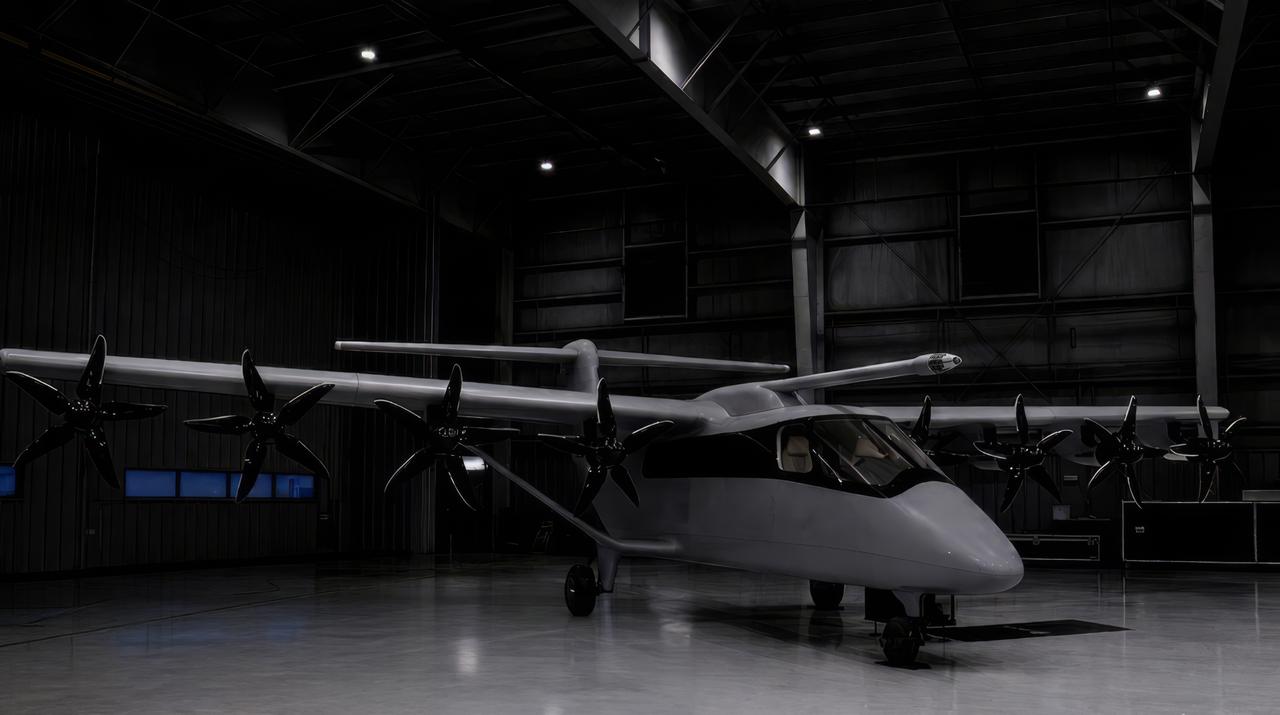
Electra Defense announced on November 9 that it had received a $4.7 million contract from the United States Air Force Research Laboratory (AFRL) for ground and flight testing of hybrid-electric aircraft technology. The Manassas, Virginia, company will gather performance data on propulsion and short-field operations, giving the military a more detailed basis for assessing aircraft intended to carry people and cargo from compact sites. 1
The announced work includes extensive ground testing of the EL9 preproduction aircraft and acoustic flights to characterize battery-only approaches and departures for special operations. Modeling will examine access to dispersed locations and the movement of time-sensitive cargo. “This contract will help us quantify those advantages,” Donn Yates, Electra Defense's vice president and general manager, said in the announcement. The award funds research and evaluation; it is not an order for an operational fleet. 1
Electra's design uses electric propellers to push air across the wing and large flaps, increasing lift at low speed. That allows a short rolling takeoff. A fuel-burning turbogenerator supplies electrical energy for cruise, while batteries support takeoff and landing and can recharge in flight. The arrangement combines the immediate power of electric propulsion with energy carried as fuel. Electra's published EL9 design calls for eight electric motors and accommodation for nine passengers. 2
For civilian communities, the attraction is an airplane that could reach useful destinations from a smaller departure site. Battery-only flight near the ground also gives acoustic testing a practical public purpose: establishing what people around those sites would hear. Regional passenger service, urgent deliveries and access to remote communities would each require a suitable operating envelope, including aircraft loading, weather and the space needed beyond the takeoff roll. Those conditions determine which places can support dependable departures.
The EL9 remains a development program. Electra's September 15 agreement with Atlas covers manufacture and assembly of airframes for flight testing and certification, with first deliveries expected in 2027. The agreement also calls for work on the production architecture. Building those airframes and completing their test program are substantial steps between the smaller technology demonstrator and a passenger aircraft an operator can put into service. 3
The civilian infrastructure work is proceeding alongside the aircraft. On November 5, Electra and VertiPorts by Atlantic announced an agreement to assess access opportunities in New York City, including barges, piers and elevated surfaces. Their collaboration begins with evaluating sites and how the EL9 might use them. For a traveler, the potential benefit would come from shortening the ground journeys at both ends of a regional trip. Site access, connecting transport and departure reliability would shape that advantage. 4
The acoustic campaign can help turn a broad promise of quieter access into measurements planners can compare. Sound recorded at a stated distance during an approach answers a different question from sound during cruise. A published account of aircraft configuration, power setting and flight path would let an airport or community judge how closely a test resembles its proposed operation. Repeated measurements across representative conditions would also show how consistently battery-only arrivals and departures deliver the intended benefit.
The same test data will feed the operator's calculation. Battery energy used near a destination has to fit alongside cruise fuel, reserves and the turnaround before the next departure. Ground crews need a workable way to refuel, inspect and dispatch the aircraft at each site. The resulting schedule has to carry enough passengers or cargo to support those costs. The contract's value for regional aviation will depend on how much of that operating picture its results make available.
Sources
Electra Defense research contract announcement, November 9, 2026
Electra technology description and EL9 design specifications, checked November 10, 2026
Electra and Atlas airframe agreement and development schedule, September 15, 2026
Electra and VertiPorts by Atlantic infrastructure agreement, November 5, 2026
Sources · 4
- https://electra.aero/news/us-air-force-awards-electra-defense-47-million-rd-contract-for-hybrid-electric-aircraft-testing
- https://electra.aero/technology
- https://electra.aero/news/electra-and-the-atlas-group-sign-airframe-agreement-for-el9-ultra-short
- https://electra.aero/news/electra-and-vertiports-by-atlantic-partner-to-advance-ultra-short-operations-in-new-york-city