BMW Begins US Production of Its New Electric Vehicle Battery Packs
The South Carolina factory brings BMW’s latest battery architecture into American production, linking new assembly methods with a broader effort to regionalize its supply chain.
Published November 15, 2026Intelligence / Energy / Advanced Battery Tech
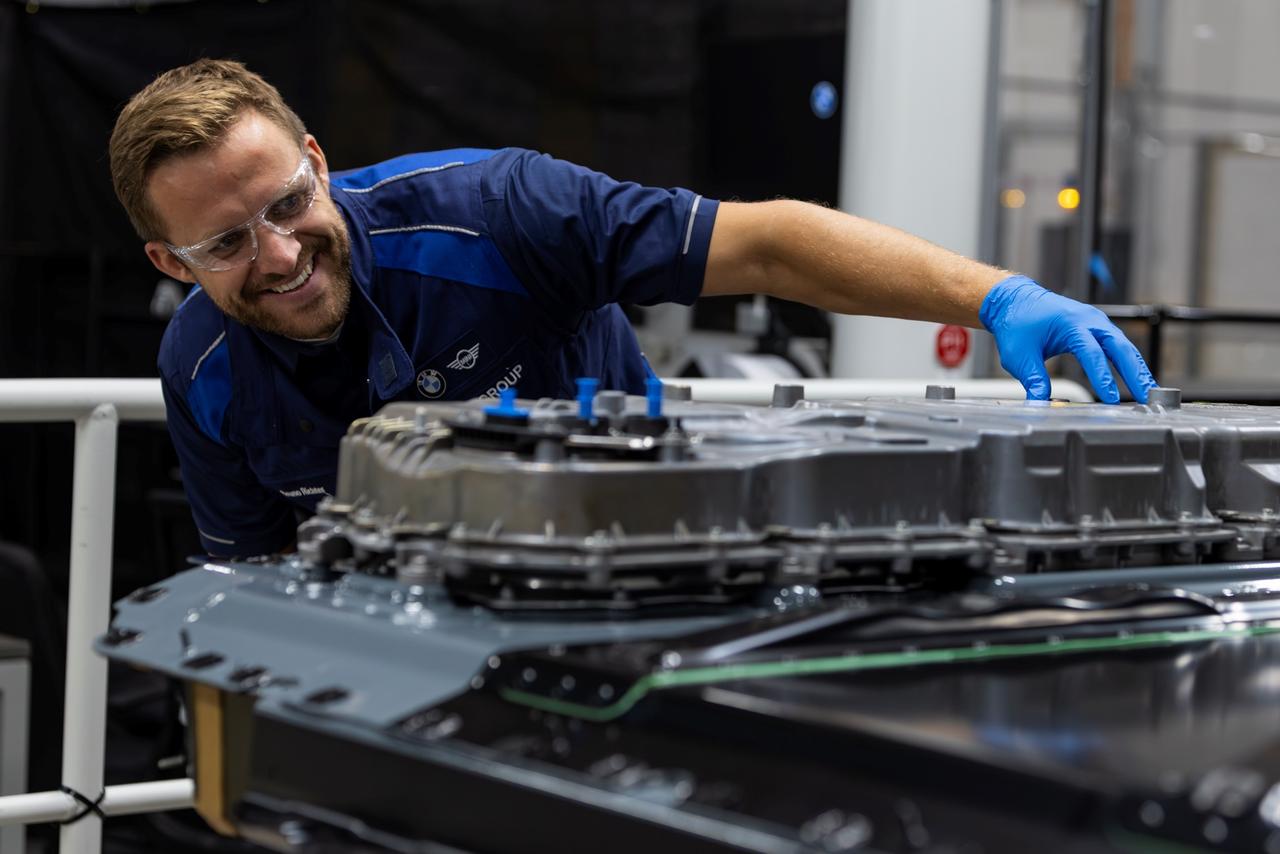
BMW has opened a battery factory just 15 miles from its Spartanburg vehicle plant, bringing a central component of its electric-car expansion into production in South Carolina. The Woodruff site will assemble packs for the iX5, BMW’s first fully electric model built in the United States, and subsequent electric vehicles. BMW opening announcement
The November 13 opening marks the start of series production of BMW’s sixth-generation high-voltage batteries. Woodruff joins operating Gen6 sites in Hungary, Germany and China, extending the manufacturing system across another major car market.
Suppliers manufacture the individual cells, which Woodruff inspects and combines into complete battery packs. Connections, cooling and controls turn those individual cells into a usable power source for the vehicle.
Locating that work near vehicle assembly shortens the journey between two closely linked production lines. It also puts the practical demands of battery manufacturing—consistent quality, dependable component deliveries and enough finished packs—alongside the engineering advances intended to improve driving range and charging.
Building a battery around its cells
Gen6 uses cylindrical cells integrated directly into the pack, a layout known as cell-to-pack. Conventional designs often group cells into separately enclosed modules before installing those modules in a larger housing. Direct integration can devote more of the available space to energy storage.
BMW’s account of Gen6 manufacturing at its new German plant describes the detailed work behind that arrangement. Cells are connected to cooling components, electrical connections are cleaned and welded, and foam helps secure the assembly mechanically. The housing is then sealed and the central control unit installed. Inspection continues through production and at the completed-pack stage. Gen6 manufacturing process
Cooling matters because charging and discharging generate heat. The electrical connections must carry substantial current, while insulation and structural support keep the cells operating safely as the vehicle vibrates, accelerates and encounters changing temperatures.
The wider Gen6 system uses an 800-volt architecture. At a given power level, increasing voltage reduces the current required, helping engineers manage electrical losses and high-power charging. The resulting charging time still depends on the battery, its temperature and the available charger. BMW also designed the system to support bidirectional charging, allowing electricity to flow from a parked vehicle to compatible external equipment. BMW’s Gen6 architecture
A factory depends on its suppliers
Woodruff opens days after BMW expanded its future cell-supply network. On November 9, the company named Samsung SDI as an additional supplier from European factories and LG Energy Solution from American factories, with deliveries due from the late 2020s.
“Diversifying procurement is an integral part of the BMW Group’s purchasing strategy,” said purchasing board member Nicolai Martin. BMW describes the arrangement as a way to strengthen regional supply while retaining several technology partners. Battery-cell supply announcement
Pack assembly is one stage in a production chain that also needs electrodes, cells, electronics and other components. The new supplier contracts support the longer-term network; their stated delivery window places them beyond Woodruff’s opening.
More than 300 employees and around 250 robots work at the plant, according to BMW. The commercial test now moves to sustained production: supplying vehicle assembly reliably while maintaining battery quality as volumes grow.