Aptiv Expands Factory Robot Partnerships
Aptiv is putting partner robots to work in its factories while preparing to supply electronics for their robotic platforms.
Published November 8, 2026Briefs / Robotics / Autonomous Systems
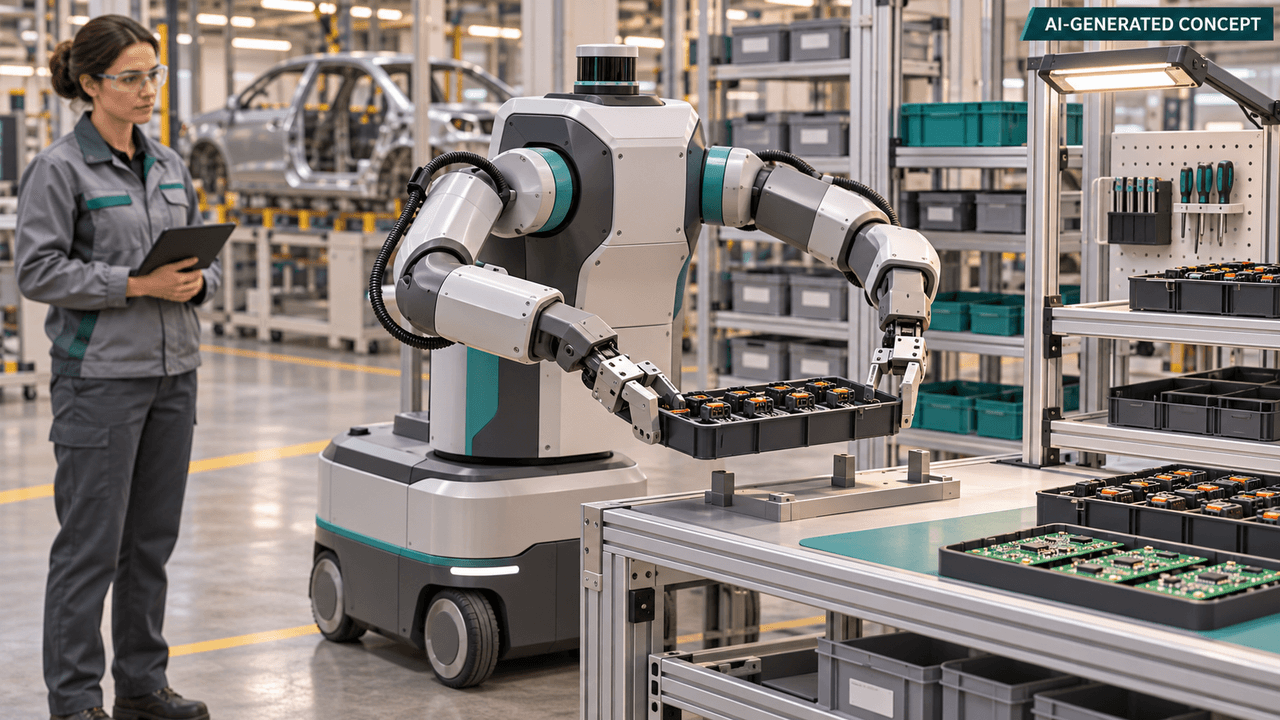
Aptiv is putting partner robots to work in its factories while preparing to supply electronics for their robotic platforms. The automotive technology supplier announced agreements with TARS and Shanghai Electric on November 6 and said hundreds of their robots are being gradually introduced to its production lines.
The arrangements give Aptiv two roles: a factory operator that can test robots during production, and a supplier helping build the machines. That connection could make it easier for engineers to identify practical problems and improve the hardware and software around them.
Aptiv says its computing platforms and intelligent power-distribution systems will be among the first technologies integrated into both partners’ robots, with initial production planned by the end of 2026. The computers are intended to support functions including interpreting sensor data and controlling movement.
Why the components matter
A robot needs dependable connections between its sensors, computers and moving parts. Data has to reach the controller, and electrical power has to reach the equipment doing the work. Those requirements make the technology inside the machine a substantial part of the engineering challenge.
Aptiv’s broader robotics offering includes sensing systems, computing hardware, real-time operating software and connections for power and data. The company also offers integration, testing and validation services. These services can help engineers bring components together and check how the resulting system behaves.
There is already a large market for factory automation. The International Federation of Robotics reported in September that about five million industrial robots were operating worldwide in 2025, with more than 600,000 installed that year. Aptiv’s expansion enters an industry with an established manufacturing base.
The results still to come
The November announcement describes a deployment ramp but gives no exact robot count, named factory tasks or model breakdown. It also provides no measured productivity gains, reliability figures or costs. Readers cannot yet judge how effectively these particular machines perform or whether they make production cheaper.
Useful follow-up evidence would include how long the robots operate between interventions, how often they complete tasks correctly and what it costs to integrate and maintain them. Results from repeated production shifts would help manufacturers assess whether the approach could work in their own facilities.
Sources
Aptiv partnership announcement | November 6, 2026
Aptiv robotics technologies overview | Accessed November 8, 2026
International Federation of Robotics industry figures | September 24, 2026