When Anthropic’s chips and its data centers arrive at different times, who pays?
Anthropic’s prospectus shows how a late data center can start the rent clock in one contract and give the company an exit in another.
Published November 21, 2026Analysis / Artificial Intelligence / Generative Models
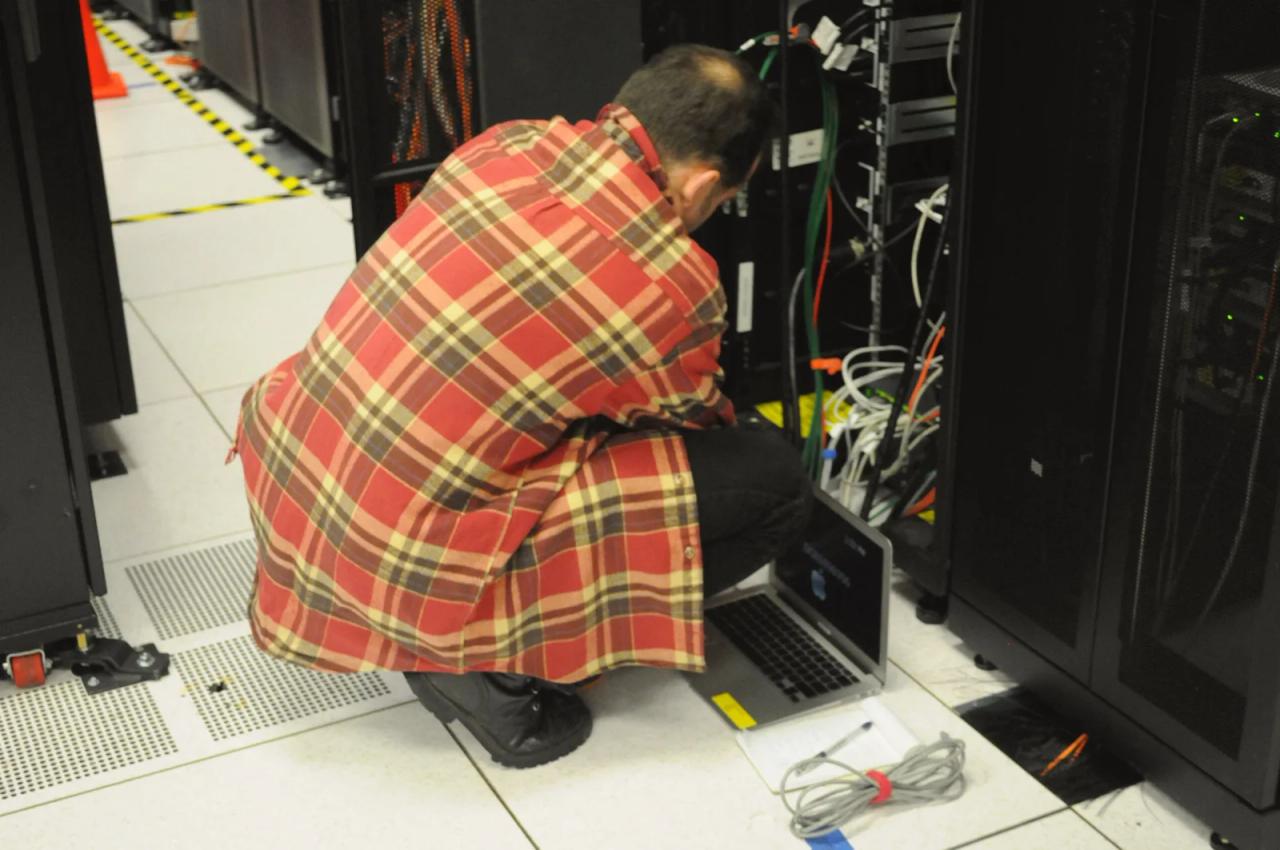
A data center can be too late to serve a single Claude customer and still be early enough for Anthropic to owe rent on the computers meant to go inside it. In another of the company’s deals, a supplier missed a deadline to secure a facility and gave Anthropic the right to walk away from roughly $35 billion of future business. The same practical problem, finding a home for powerful chips, can leave Anthropic owing rent in one contract and free to reconsider a purchase in the other.
Anthropic closed its initial public offering on Friday. Investors bought about $93.5 billion of shares in the offering, of which about $91.6 billion in gross proceeds went to the company. Selling shareholders received the remainder. The cash gives Anthropic more room to secure computing capacity years ahead of demand. It cannot make the chips, the power supply and the customers arrive on the same day.
The prospectus puts a price on buying time. In the quarter ended September 30, Anthropic procured about $5 billion of computing power on short-term commitments. It says comparable capacity costs significantly less under multiyear commitments. Short-term buying gave Anthropic capacity to meet demand in that quarter. Signing earlier can secure a better price, but it also means choosing how much to buy before anyone knows quite how busy those machines will be.
Consider what has to happen before one of them earns revenue. A developer secures a site and arranges power. Someone orders the specialized processors and memory. The equipment arrives and the facility becomes capable of running it. Anthropic must then put the capacity to work. It can train a model, support its own operations or answer customer requests. Only some of that work generates a bill to a customer at the time it runs. The contracts determine who can wait without paying at each step.
A lease can start before the building is ready
Anthropic buys computing services from cloud providers. Under a second approach it calls Anthropic Direct, it also arranges for dedicated facilities and procures the computing equipment separately. The reason to separate them is concrete. A company that reserves space and power early can defer a much larger decision about which accelerators to obtain and when. If demand rises as expected, it can move work from higher-priced temporary capacity onto machines secured for years. Until the new machines can run, the two sources of capacity have different uses and different prices.
Broadcom and financing entities to which leases have been assigned sit on the equipment side of that arrangement. Anthropic reports about $161.2 billion of rent, excluding interest, over five-year master equipment leases. A named 2026 lease accounts for about $125.2 billion of that total. Quarterly rent ordinarily starts when equipment is ready for service at the designated data center. In specified circumstances, including a delay in facility readiness, rent can begin earlier. During the lease period the agreements generally cannot be canceled, subject to the lessor’s rights in a default.
A delay could therefore leave Anthropic paying for equipment while it still buys capacity elsewhere to serve customers. The prospectus discloses the contractual exposure. It gives no figure for early rent actually incurred or temporary capacity attributable to a particular late site. Some of the tensor processing unit capacity covered by the leases began coming online in 2026. Anthropic expects additional capacity beginning in 2027. Each tranche that enters service can narrow the gap between what the company owes and what it can use.
Lambda sells Anthropic a different product: access to computing powered by Nvidia processors. Fees under their approximately $41.3 billion of agreements, extending into 2034, accrue as capacity is delivered and Anthropic accepts it. Lambda missed the deadline to secure a facility lease for the August agreement, which represents about $34.9 billion of that total. The miss gave either party the right to terminate that agreement. As of the November 18 prospectus, neither had given notice and Anthropic said it had no intention at that time of terminating. Friday’s IPO closing announcement gave no update on that agreement.
For Anthropic, the acceptance condition protects cash before delivery. It does less for a customer who needs computing today. And the exit right belongs to Lambda too: keeping the agreement alive requires both sides to continue. For the equipment lessor, early rent can instead preserve the payment stream even if a host facility slips. Those are competing ways to allocate schedule risk across separate purchases. The filing offers no evidence that Anthropic moved an order from one chip supplier to the other.
What a quarter bought
Anthropic’s adjusted operating income actually rose between the June and September quarters, from about $2.2 billion to $2.5 billion. Yet adjusted operating margin, the share of revenue left under the company’s adjusted measure, fell from 19% to 15%. Management attributed the decline primarily to the short-term compute. On the unadjusted accounts Anthropic went from $974 million of operating income to a $567 million operating loss. It also identified $2 billion of noncash charges connected with its donation-matching program in explaining that change.
The $5 billion bought usable computing capacity. Treating all of it as the cost of being late would assume that an equivalent multiyear purchase cost nothing. The filing supplies neither a matched price for the same workload nor the revenue the company might have forgone by waiting. Temporary compute can be expensive per unit and still be worth buying when the alternative is to turn away paying customers. The calculation runs the other way when demand softens: a temporary commitment expires sooner, whereas quarterly equipment rent keeps coming due.
Customer commitments give Anthropic some protection on the revenue side. Consumption-based revenue accounted for $26.3 billion, or 79% of revenue, in the first nine months of 2026. Some consumption arrangements include minimum commitments. The category therefore cannot be read as 79% entirely discretionary spending. Nor does a customer minimum tell an investor when a particular data center will fill. A customer buys a service from Anthropic; it need not place its requests on the racks for which the next rent installment is due.
How much comes due, and when
Anthropic disclosed about $900.9 billion in aggregate purchase and lease commitments, substantially all for compute and infrastructure. The figure spans years, in some cases into the 2040s. Within it, about $186.2 billion relates to arrangements with conditions before commencement or exercisable termination rights. A nearer-term slice is more informative about immediate calls on cash: about $70.7 billion is expected to be paid in the twelve months after September 30, including about $4.2 billion subject to such conditions or rights.
Outside that total is an estimated $150 billion to $175 billion of payments under arrangements without fixed dollar commitments. One component is the estimated $125 billion to $150 billion for additional Google tensor processing unit capacity, whose delivery and financing terms affect the eventual payments. The similar-sounding $125.2 billion already inside the Broadcom equipment leases is a different obligation. The separate Google hosting commitment of at least about $121.3 billion was covered in the earlier chip story. Counting those figures as additional fixed chip sales would misstate both what Anthropic ordered and when it must pay.
Friday’s closing also included a separate $26 billion private placement. Google’s participation partly fulfilled an existing commitment. Treating every dollar as a new promise would overstate the change in financing. Comparing the IPO proceeds with all the years of equipment and hosting payments would make a different mistake: the business will collect revenue, incur costs and make financing decisions throughout those years.
The evidence to watch comes in pairs. As new equipment enters service, does short-term spending fall for comparable work, or does demand absorb both sources of capacity? When leases commence, does paid customer use rise alongside them, or does Anthropic carry more capacity than it needs? Rising short-term purchases during rapid growth could indicate strong demand even with construction on schedule. Rising rent alongside idle equipment would tell a less favorable story. Anthropic’s filings explain how either outcome could occur. They do not yet tell shareholders how many days, or dollars, separate the arrival of a machine from the arrival of the work that will pay for it.
Sources
Anthropic’s November 20 closing announcement · Final prospectus, especially Management’s Discussion and Analysis and Contractual Obligations · November 19 SEC filing record · November 17 amended registration statement · Earlier coverage of Google’s computing business