Google built a chip for its own customers. Now it can sell computing power to its rivals.
A rival AI lab can buy Google computing power while competing with Gemini. What that buys Google, Nvidia and their suppliers depends on which orders it wins.
Published November 20, 2026Analysis / Artificial Intelligence / Generative Models
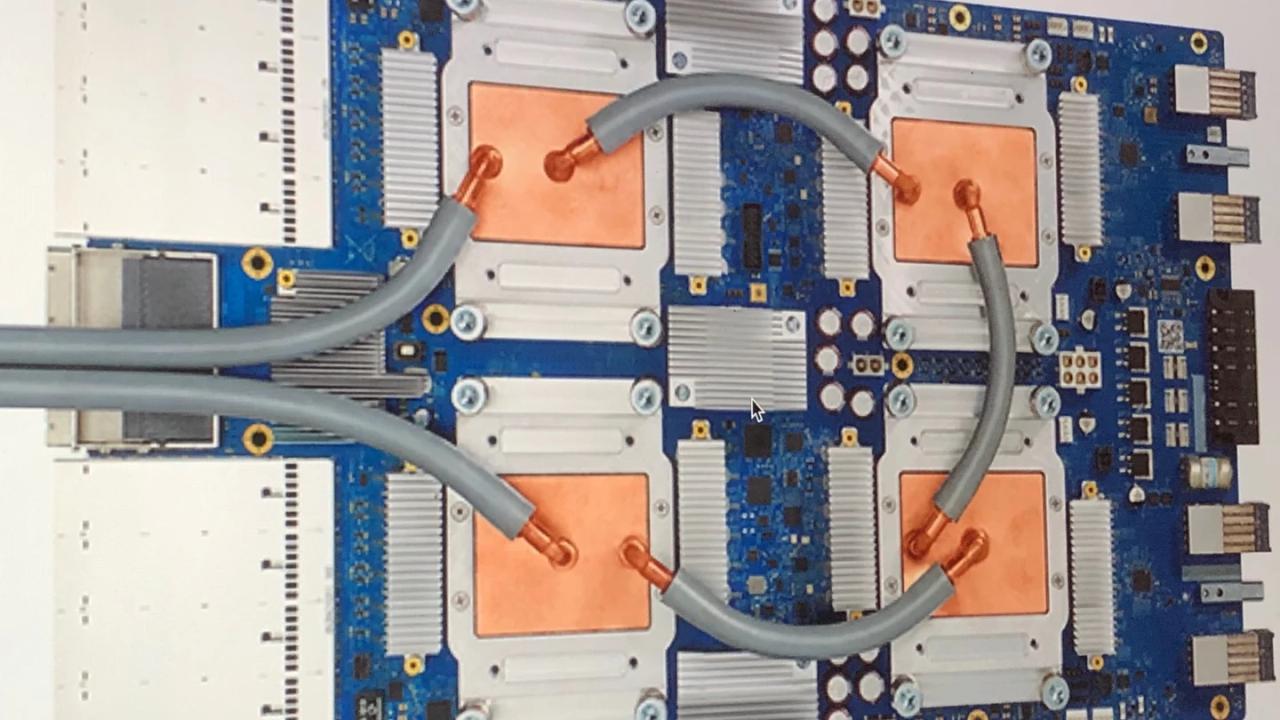
Google’s chip business began with three minutes of speech. As its engineers later recalled, they had calculated that if people used voice search for just three minutes a day, running the speech-recognition models on the processors then in use would require twice as many Google data centers. It was a planning scenario, but it gave the company an advantage few would-be chip designers enjoy. Google knew the job, controlled the software and already had customers waiting for an answer. If a custom processor made those answers cheaper, Google could recover its investment one search at a time.
That history helps explain investor Dave Blundin’s bull case on the Moonshots livestream. In the exchange beginning around 13:58, the panel links Google’s reach through data and consumer products to its growing supply of custom computing power. By 16:44 the argument has reached the factory: if Nvidia’s influence weakened, Google could be in a position to claim a larger share of the manufacturing capacity that supplies the AI industry. The larger idea is that Google could gain power over the economics of AI before Gemini establishes a durable lead over rival models. A customer choosing a rival might still help pay for Google’s next chip.
There is a way to test that idea without making assumptions about access to anyone’s private data. Running a widely used service teaches Google which operations consume costly memory, which responses keep users waiting and which computations recur often enough to justify dedicated circuitry. Its model builders can change the software while its chip designers change the machine. Once an improvement reaches production, Google can use the savings to serve the same workload at lower cost, offer a more capable service at the old price or quote an outside customer a competitive rate. Those are three ways to earn a return on one engineering effort. Alphabet has not disclosed how it divides the return among them.
The size of that internal customer is visible even though its chip inventory is not. On its third-quarter earnings call, Alphabet said its first-party model interfaces processed nearly 32 billion tokens per minute, up 40 percent from the previous quarter. Tokens are the pieces of text or other encoded information a model processes. That figure measures traffic through those interfaces, with no breakdown by accelerator or cost per token. It explains why a small improvement repeated across Google’s own workloads could justify testing an expensive chip design before a single outside buyer signs up.
When a rival becomes a customer
A laboratory buying computing time from Google can now ask a question that would once have made little sense. Could Google deliver the machines to the lab instead? Alphabet told investors it delivered its first tensor processing unit systems to customer data centers in the second quarter of 2026 and began recognizing revenue. Oracle subsequently announced plans to offer Google TPUs through its own cloud in 2027. One transaction has already crossed the boundary of Google’s cloud. The other would put a competing cloud operator on the sales floor.
A tensor processing unit, or TPU, is Google’s design for the repeated arithmetic of machine learning. A lab that takes delivery assumes the job of housing and powering the machines. In return, it gains more say over where its models and data run. Buying through Oracle would shift some of that operating burden back to a cloud provider. For Google, each route opens a market among customers with good reasons to keep their computing elsewhere. For Nvidia, the consequences depend on what those customers would otherwise have bought.
Anthropic’s prospectus gives an unusually clear view of how little a large dollar figure settles that question. It discloses a minimum commitment of approximately $121.3 billion for Google hosting from April 2026 through July 2033, subject to adjustments. Separately, it estimates spending $125 billion to $150 billion for additional TPU compute expected in 2028–31. The second figure has no fixed dollar minimum. Anthropic lists several possible ways of obtaining the capacity, including direct purchases and third-party leases. Alphabet itself told investors that it expected the vast majority of revenue from its existing TPU system sales agreements in 2027. Delivery dates, accounting periods and the term of a hosting contract all run on different clocks. Counting both Anthropic figures as booked chip sales would convert years of hosting into hardware revenue and an estimate into a contract floor.
For a rival lab, the appeal comes with a bargaining problem. Anthropic can run Claude on Google infrastructure while competing with Gemini for the same customer. A second source of accelerators gives Anthropic an alternative when it negotiates for Nvidia machines. Depending heavily on a competing model developer gives Anthropic its own reason to keep that Nvidia option alive. Google can gain an infrastructure customer even in a market where buyers deliberately divide their orders to limit its power.
Two partnerships put that proposition to different tests. Google and Meta have built TorchTPU so engineers who develop models in PyTorch can try Google hardware with less rewriting. The project describes compatibility testing across roughly 5,000 publicly available models. Its first testing stage uses synthetic weights to check that models execute and compile. Passing that stage makes a trial cheaper. It tells a buyer little about the cost of running its own customized model under a production deadline. On the financing side, Blackstone committed an initial $5 billion of equity from its funds to a venture in which Google supplies hardware, software and services. The venture expects its first 500 megawatts of capacity in 2027. Capital committed and machines delivering useful work are milestones separated by power connections, construction and paying customers.
Two customers can keep one foundry busy
On the Moonshots livestream, the panel entertained the idea that Google might use a moment of weakness at Nvidia to secure manufacturing capacity at Taiwan Semiconductor Manufacturing Company. Asked at 16:05 what he expected within 90 to 120 days, host Peter Diamandis described a possible Google plan for frontier AI labs. When asked if he had inside information, he offered his expectations about Google’s leadership. At 16:44 the discussion turned to TPU growth and a possible opening at TSMC. From 17:18 the counterargument centered on how hard it would be for Google to move up among frontier labs without a surprise partnership or acquisition. That was a debate about what Google might do. Its bearing on the chip business can be tested against actual orders.
Consider a lab with financing for one new cluster and power for only one. If it awards the order to Google after pricing an Nvidia system, Nvidia has lost a sale it might have won. Yet the manufacturing work need not leave Taiwan. Nvidia identifies TSMC fabrication processes and its CoWoS advanced packaging in shipping Vera Rubin products. Broadcom has agreed to develop and supply future TPUs for Google and identifies TSMC among the foundries it uses. Broadcom’s disclosures leave the specific manufacturing and assembly allocations for individual TPU 8 products undisclosed. Even if both orders went to the same foundry, moving between designs could change the amount of silicon, memory integration and packaging work purchased.
Now consider a lab that keeps its Nvidia cluster and buys TPUs for experiments it previously had no capacity to run. Both suppliers can grow. TSMC could sell more processed wafers and more assembly services if it has capacity at the required steps. The stages have different constraints. A wafer fab prints circuits across a silicon disk. Packaging connects usable chips to each other and to high-bandwidth memory. Extra finished silicon earns little for a system vendor waiting for an advanced package. Conversely, an available assembly line cannot fill a rack when too few usable chips come off the wafer.
TSMC reported $46.7 billion in third-quarter revenue. High-performance computing represented 68 percent of net revenue, while the 2-nanometer process represented 8 percent of wafer revenue. Neither percentage measures factory utilization. On the October earnings call, chief executive C.C. Wei said demand exceeded TSMC’s ability to supply it and described advanced packages already in production and larger ones under development. In a full line, an order replacing another can change prices or product mix without adding much near-term volume. A sustained second source of demand can help fill an expanded line and spread its fixed cost across more shipments. The upside depends on yield, the price customers pay and the cost of adding capacity. No public figure here identifies the fraction of wafer starts or packaging slots either chip vendor has secured.
A deadline changes the arithmetic
Google’s own systems show why even a customer committed to TPUs might want fewer of them per job. In MLPerf’s November training results, 2,048 seventh-generation Ironwood chips took 5.03 minutes to move a DeepSeek-V3 workload from a specified checkpoint to its quality target. Four times as many chips took 1.70 minutes. The larger system bought the lab 3 minutes 20 seconds. It also raised the hardware time consumed from about 172 to 232 chip-hours, a 35 percent increase. At 4,096 chips, the intermediate result was 2.62 minutes and about 179 chip-hours. Most of the initial speedup came cheaply in hardware time. The last minute was considerably more expensive on that measure.
A team waiting to see whether an experiment worked may gladly take that minute. Another with four independent jobs and 8,192 chips might divide them into four groups. If each group reproduced the submitted result concurrently, four jobs would finish in about five minutes. Running four jobs in succession on the whole cluster would take 6.8 minutes even before time between runs. Shared storage or networking could erase that advantage. It is a purchasing question a lab can test on its own queue. The benchmark supplies neither a power reading nor a cloud bill.
Nvidia submitted the same checkpoint-to-target workload on 10,240 Blackwell Ultra GPUs and finished in 1.38 minutes. That works out to about 236 GPU-hours, close numerically to the largest Google run’s 232 TPU-hours. Those units are hours of two different products with different prices, power draw and software. The closeness of the numbers is a good reason to ask for an actual bid on the job. It is a poor reason to declare a cost winner.
Google’s November announcement also illustrates how much of the contest takes place after a chip is designed. Its 8tx reuses 8t silicon for a configuration designed to protect data during processing. Its 8i Max places two 8i chips in one package, increasing the computation and memory throughput available together. The measured MLPerf runs used the preceding generation. A buyer weighing these new systems against Nvidia has to run the intended model, meet the same accuracy and response-time requirements, and count the work of moving software. Blundin’s thesis has a demanding test and an early one. The demanding test is a recurring workload moving from Nvidia to Google at a price, quality and deadline the buyer prefers. An earlier sign would be a rival lab expanding on TPUs through a second cloud while keeping its Nvidia fleet busy. Nvidia could still be selling every machine it makes, and Gemini could still lose that lab’s end customer. Google would nevertheless have changed who can supply the computing behind the answer.
Sources. Google engineers on the voice-search design decision · Moonshots discussion from 13:58 · Alphabet Q3 operating figures · PyTorch project’s testing methodology · Blackstone venture terms · Alphabet earnings call · Oracle announcement · Anthropic prospectus · Moonshots recording at 16:05 · time-coded transcript · Broadcom agreement · Broadcom manufacturing disclosures · Nvidia supply-chain statement · TSMC results · TSMC revenue breakdown · TSMC earnings call, pp. 11–15 · Google architecture · MLCommons closed-division comparison · MLCommons submitted results.
An earlier generation of Google’s accelerator, the TPU 3.0. Zinskauf, CC BY-SA 4.0. Cropped for display.