Heat from Dielsdorf’s servers reaches apartments as crews extend the network
Until this month, heat from Green’s data centers in Dielsdorf, Switzerland, had a short journey.
Published November 23, 2026Intelligence / Biourbanism / Sustainable Infrastructure
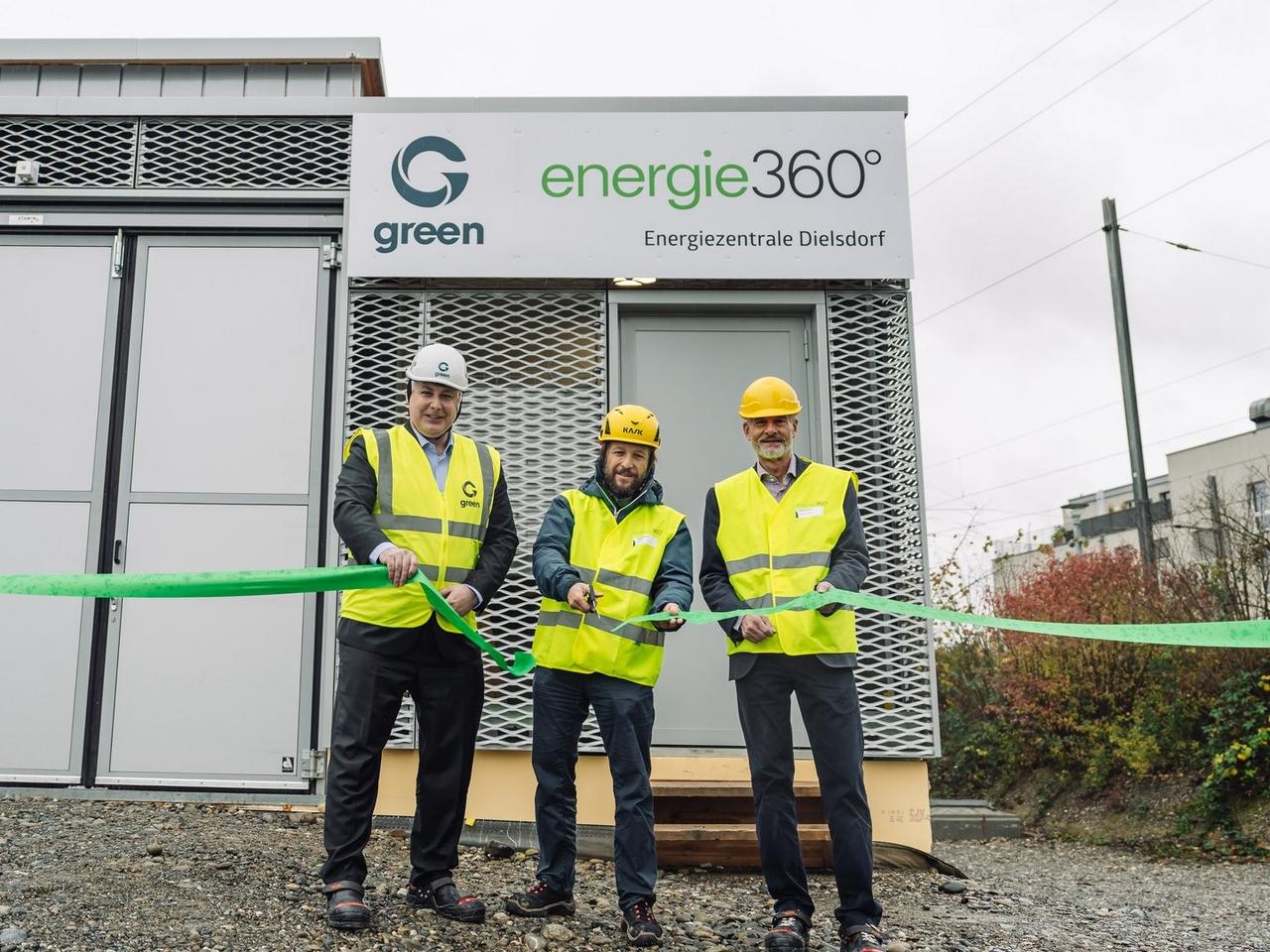
Until this month, heat from Green’s data centers in Dielsdorf, Switzerland, had a short journey. Some stayed on the campus. Some went to an industrial neighbor. On November 19, when utility Energie 360° formally opened its new energy center, Green reported that the heat was reaching apartments for the first time. Green’s opening announcement
A data center has to cool its servers whether anyone buys the heat or not. An apartment building needs heat at a useful temperature, on the coldest night of the year, even if the servers next door go quiet. The Swiss project puts a utility between those two obligations. What the residents buy is hot water delivered to their building’s heating system. The utility takes responsibility for getting it there.
Dielsdorf mayor Andreas Denz traced the arrangement back to the data centers’ building permit. In a 2024 interview, he said the town required Green to make the waste heat available. Green’s offer also changed a decision in neighboring Regensdorf. The town had already told residents to expect a wood-fired heat and power plant, energy official Max Walter recalled. When Green offered the raw heat free of charge, Energie 360° changed the plan. The utility would still have to pay to raise the water temperature and build and run the network. Energie 360° interview with Denz and Walter
The two towns get their temperature lift in different places. In Dielsdorf, heat exchangers take warmth from the servers’ cooling circuit. Heat pumps at the campus energy center bring water to about 70°C for the local network, Green says. At each connected building, the water gives up heat to the building’s own system and returns cooler. The link to Regensdorf is designed to carry water at about 28°C. Large heat pumps in Regensdorf would raise it to 70°C there. That design includes heat storage and a gas boiler for very cold days or maintenance. Green’s account of the local network · Regensdorf link design · Regensdorf energy center
The figure of 11,500 households describes what the network could reach at full buildout across six municipalities, alongside industrial and commercial customers. One reason that figure is still in the future lies under the streets. In Regensdorf, existing utility lines delayed work in Pumpwerkstrasse. On Trockenloostrasse, the published schedule runs from November 2026 into June 2027. Which street gets a pipe can turn on a single customer. Denz gave the example of a school. Its heating demand can justify laying a main, making it economical to pick up individual houses along the way. Interview with Denz · Utility construction schedule
For a building owner weighing a connection against replacing a boiler, the price of recovered heat at the campus tells only part of the story. Energie 360°’s standard offer has a one-time connection charge, an annual charge based on the heating capacity the building reserves, and a charge for energy consumed. An owner can pay more upfront to reduce the annual fixed charge. The previous boiler’s fuel use and the cost of replacing it belong in that comparison too. Utility pricing options
The most revealing figures from the first heating season would come from both ends of the pipe. How much useful heat reached customers? How much electricity did the heat pumps consume, and what heating system did each building retire? The opening announcement gives neither those figures nor a count of connected apartments.
Sources
Green’s opening announcement · Energie 360° interview with Denz and Walter · Green’s account of the local network · Regensdorf link design · Regensdorf energy center · Utility pricing options