Hayabusa2 expects just ten hours to steer by its next asteroid
A new asteroid target gives the spacecraft a much shorter window to guide its approach.
Published November 22, 2026Intelligence / Frontier Tech / Experimental Systems
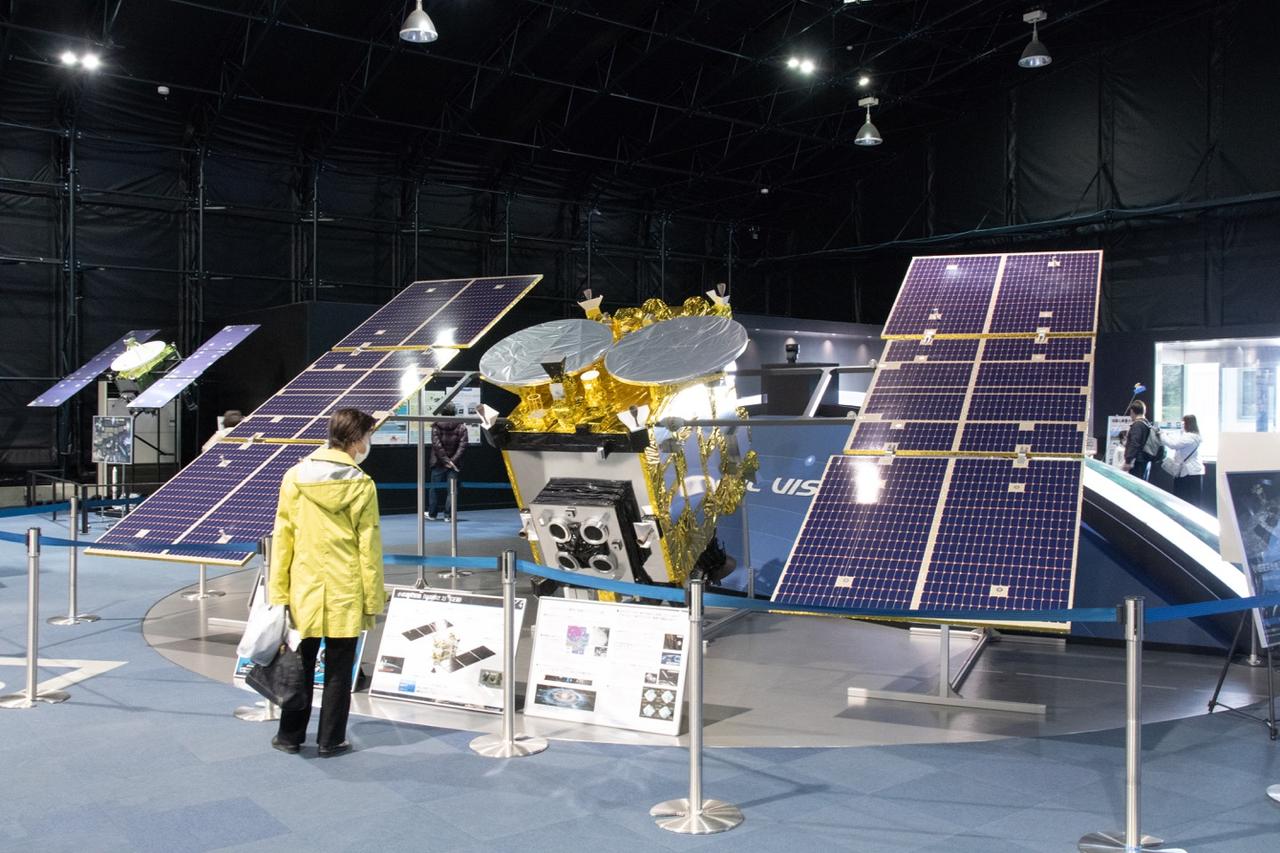
Fourteen days before Hayabusa2 swept past the asteroid Torifune in July, the spacecraft could already pick out its target with its telescopic navigation camera. At its next asteroid, the same camera may have only ten hours between its first sighting and closest approach. By then the spacecraft will be closing at about six kilometres a second. A choice that makes the destination easier to reach makes the final approach harder to steer. JAXA mission briefing, slides 4 and 11
Japan’s space agency announced on November 17 that it is redirecting Hayabusa2 to fly past 2015 BM510 in April 2028. Its previous destination was 1998 KY26, where it intended to match the asteroid’s motion for a rendezvous in 2031. The new path skips a planned swing past Earth. It trades the chance to linger beside one small world for a close, fast look at another while the spacecraft can still get there. JAXA trajectory options, slides 8–10 · Current mission schedule
The ion propulsion system can still run. Engineers paired the ion source from one engine with the neutralizer from another. One part accelerates charged particles to produce thrust; the other supplies electrons so the spacecraft does not accumulate charge as particles stream away. JAXA confirmed that the pairing works, but could not reliably predict how long it would last. The old route called for about 650 metres per second of cumulative velocity change and more than 10,000 hours of ion-engine operation. For the new trajectory the agency estimates about 24 metres per second of velocity change, within the roughly 30 it is confident the chemical thrusters can deliver. Those numbers describe different routes and propulsion strategies. Their difference is no precise fuel reserve for the encounter. Engineering assessment and trajectory comparison
Astronomers on Earth already know BM510. JAXA lists a rotation period of about 49 minutes and a diameter estimate spanning 17 to 74 metres. The ten-hour clock concerns when a small, faint object becomes visible from the approaching spacecraft. Ground observations can improve the predicted orbit before the encounter. Once Hayabusa2’s camera picks up the point of light, the plan calls for a course correction directed from Earth, followed by onboard guidance. The aim is to pass a few hundred metres from the asteroid’s center. Its precise shape, and hence the distance from its surface along that path, has yet to be seen. JAXA observation sequence and target properties, slides 11–13
Torifune offers a measured precedent. Hayabusa2 passed about 744 metres from its center, roughly 400 metres above the surface, at 5.3 kilometres a second. That flight gave the team experience tracking an asteroid sweeping rapidly across the camera’s field of view. BM510 will give it far less time to turn a sighting into a corrected trajectory. JAXA’s preview uses a scaled representation of Ryugu to simulate how a small object might blur during the flyby. The first real images will have another job before anyone studies the landscape: they must help put the spacecraft in the right place to take the next ones. Torifune flight results · Simulated camera views
Cover photograph by Σ64. Original photograph, resized for display under CC BY 4.0.