Could one aircraft spare a northern Ontario patient a change of planes?
Horizon’s prototype has shown it can transition to wingborne flight. A real Ontario patient transfer shows what a full-size aircraft would have to do to spare a handoff.
Published November 22, 2026Intelligence / Transportation / Urban Air Mobility
A patient leaving Moose Factory Island for specialist care in Thunder Bay may have to change vehicles twice. A helicopter takes the patient to Moosonee Airport. A plane carries them to Thunder Bay, where a land ambulance meets the flight for the trip to the regional hospital. Ornge, Ontario’s air ambulance service, uses that itinerary to explain how it counts its work. Ornge counted 25,576 legs for 20,548 patients across the province in 2025–26. The report gives no elapsed time for the island journey or count of patients who took it. Ornge annual report, printed page 20
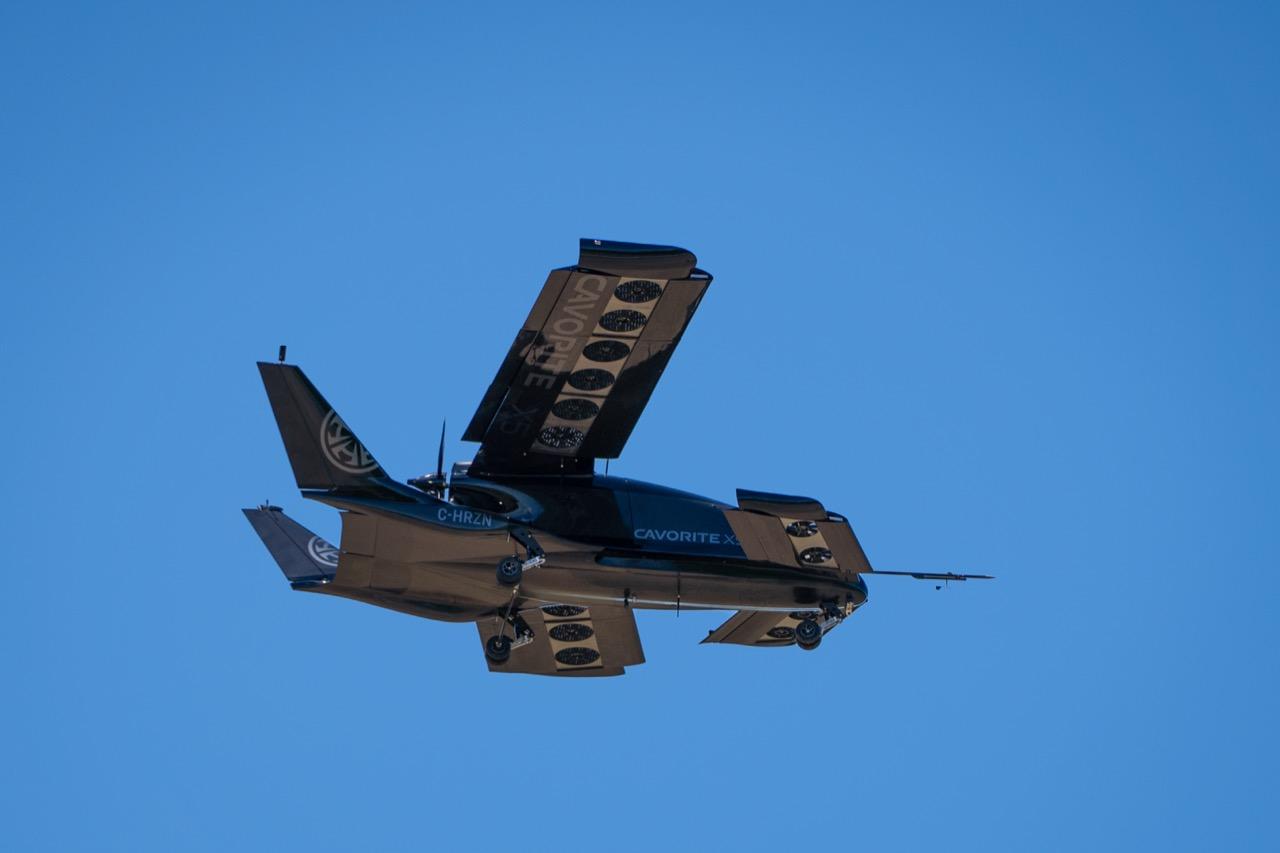
Moosonee is where Horizon Aircraft’s Cavorite X7 could earn its place. An aircraft that lifts a stretcher from the island vertically and then cruises on its wings might let the patient stay aboard while passing the airport where a second crew and plane would otherwise have to meet them. That is a different proposition from racing a helicopter all the way to Thunder Bay. The long leg in Ornge’s example already belongs to an airplane. Its own fleet includes Leonardo AW139 helicopters and Pilatus PC-12 turboprops. Ornge fleet
The Canadian manufacturer has a prospective partner in a different northern Ontario community. On November 5, Constance Lake First Nation and Horizon announced a memorandum to explore a purchase and medical service. Chief Rick Allen described the work still ahead in the announcement: “We are working on use cases and service standards now.” The agreement identifies neither an order nor a route operated by Ornge. Partnership announcement
The X7 would use battery-powered fans embedded in its lifting surfaces to rise vertically. As the wings take the aircraft’s weight, panels close over the fans, smoothing the surfaces for forward flight. A fuel-burning turbine powers forward flight and can recharge the batteries for landing. Horizon has flown the transition on a subscale demonstrator. On November 10 it reported completing preliminary design reviews for the full-size machine and beginning to release designs for manufacture. Its October investor update put completion around the end of March 2027, with ground and taxi tests before flight. On November 20, chief executive Brandon Robinson told Aviation Week that assembly could slip by several months. Design review · Investor update · Aviation Week
The geography makes this a demanding test. Moosonee and Thunder Bay airports alone are about 705 kilometres apart in a straight line. Horizon advertises 800 kilometres with reserves. The roughly 95 kilometres between those figures is a small margin on a map, and tells a dispatcher little about a particular winter flight. A headwind lengthens time aloft. A diversion can add distance. Hovering at the pickup site and landing at the far end draw on the lift batteries. Horizon lists about 450 kilograms of mission payload after fuel and one pilot. A patient, stretcher, medical crew, oxygen and equipment all draw on that allowance, as would a second pilot. Horizon has yet to demonstrate the range with that load or earn the instrument-flight and known-icing approvals it seeks. Even a direct flight to Thunder Bay airport would leave the final ambulance ride in place. Airport distance · Horizon specifications
Horizon’s best-looking cost figure assumes every passenger seat earns its keep. Its current model puts the X7 at 97 cents per seat-mile against about $3.50 for a comparable helicopter on a 300-statute-mile mission, with instrument-flight reserves, one pilot, every seat occupied and 750 flight hours a year. An April presentation also gave 97 cents, but paired it with $4.64 for a Bell 429 at 500 hours a year. Neither comparison prices the trip of one patient whose stretcher occupies cabin space that could otherwise hold passengers. Robinson has put the price for early customers at US$6 million to $7 million. An operator would carry the cost of keeping that aircraft available even on days it never launches. Current cost model · April presentation, slide 14 · Robinson interview
Consider the cost of moving the aircraft itself one mile. If the X7 costs 30 percent less per flying hour and cruises at 200 to 220 mph, how far does that hourly saving go? An Airbus H145 cruises at about 150 mph. At those speeds, the X7 would cost about 48 to 52 percent less per mile in cruise. That calculation uses the Airbus as an illustration. It leaves out hover, the empty trip to pick up a patient, maintenance downtime and the cost of keeping a second aircraft ready when the first is unavailable. Those costs belong in the operator’s budget even when they produce no patient miles. Airbus H145 performance
The strongest case for the X7 would be a route where patients regularly wait for the second aircraft and a single suitably equipped machine can reach them promptly in the same weather. An operator could test that by recording when dispatch takes the call, when a crew reaches the patient, how long the change at Moosonee takes and when the patient reaches the receiving hospital. Include the calls that require a fuel stop or a substitute crew, then divide the full cost of providing the service by the number of completed transfers. The number missing from Horizon’s comparisons is the one a patient on the island would recognize: how much sooner they reach the hospital when they can stay on the first aircraft.