China dug a cavern to store six hours of power. The first electricity has reached the grid.
First grid connection puts a lined-rock storage design to its next test.
Published November 22, 2026Intelligence / Energy / Grid Technology
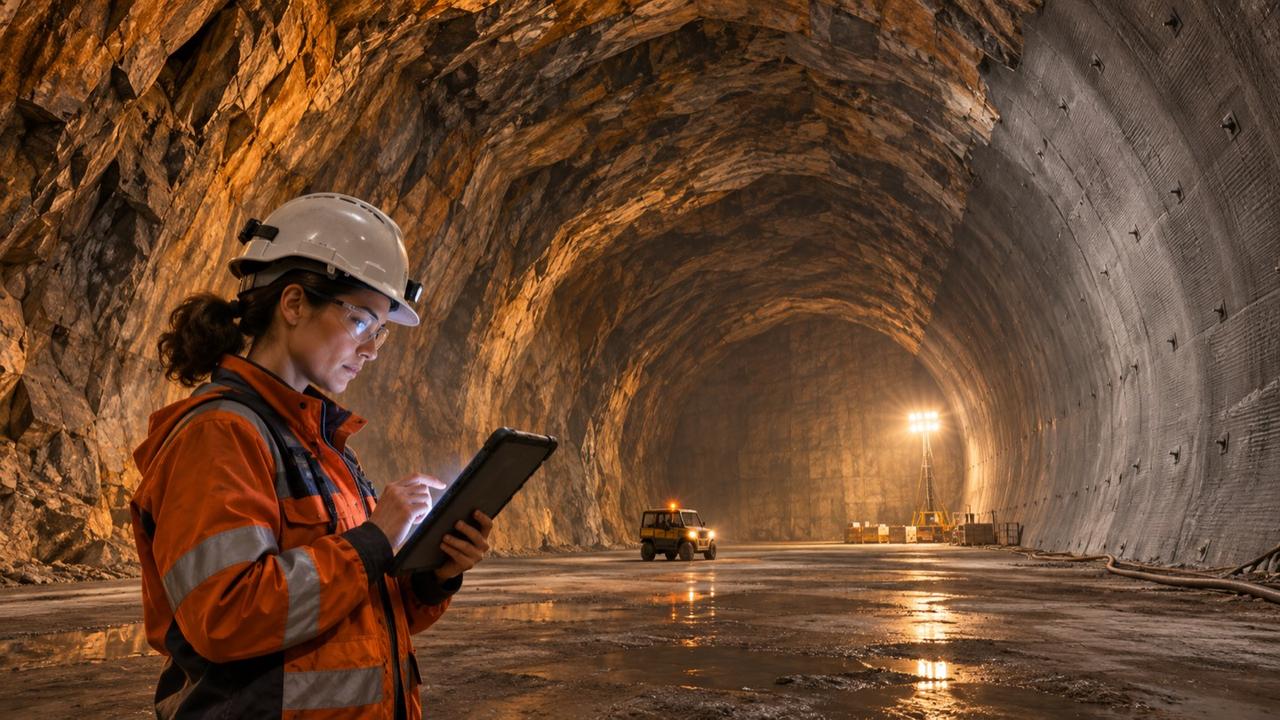
Nearly a year separated two electrical milestones at Yumen in northwestern China. On November 17, 2025, engineers energized a 330-kilovolt line and the auxiliary supply that powers the storage plant’s own equipment. On November 16, 2026, its generating unit connected to the grid for the first time. Between those dates came a test roughly 110 meters underground: could an excavated chamber hold the compressed air that would drive the generator? China Energy Engineering, 2025 · 2026 commissioning notice · Compressor supplier’s test report
The plant, called Yuanchu No. 1, sits in the wind- and solar-rich Hexi Corridor in Gansu province. A grid operator there has a use for electricity that can be put away on a windy afternoon and delivered through the evening. Large compressed-air plants have often depended on finding a suitable salt formation. At Yumen the developer chose where to excavate the storage chamber. If the rock and its lining stand up to years of use, that choice could bring storage closer to the power lines that need it. China Energy Engineering
The chamber supplies only half of what the turbine needs. Compressing air makes it hot. The plant captures that heat during charging and stores it separately. When electricity is needed, the returning heat warms the high-pressure air as it expands through generating machinery. That lets Yumen dispense with supplementary combustion. For comparison, PowerSouth’s McIntosh plant in Alabama, established in 1991, stores air in a solution-mined salt cavern and uses natural gas during generation. Yumen’s engineers have taken on two jobs that the older design handled differently: building the underground pressure enclosure and keeping enough of the heat for the return trip. Yumen project account · Baldwin EMC on its power supplier’s McIntosh plant
Rock can carry the load while a lining seals paths through which air could escape. That division buys geographical freedom at the price of excavation, lining and site investigation. Fractured rock, groundwater and the stresses around a newly excavated opening all bear on whether a particular site is practical. A leak costs more than air: electricity has already been spent compressing every kilogram that escapes. Heat lost before discharge reduces the electricity recovered even if the chamber itself holds pressure. Underground test facility and lining · Experimental research on shallow rock storage
The project’s test history shows what engineers have established so far. In August 2025 the developer reported seal cycling at about 18 megapascals in a research facility in Changsha, Hunan province. This September, compressor supplier Shaangu reported that the first stage of gas injection into Yumen’s own Cavern No. 4 reached 12.63 megapascals. Its announcement gave the peak pressure without a measured long-term leakage rate. November’s first grid connection then brought the storage chamber, heat system and generating equipment into grid-connected commissioning. Changsha test account · Shaangu · Commissioning notice
California offers a useful comparison because its engineers also propose digging where storage is wanted, but intend to regulate the air pressure with water. At Willow Rock in Kern County, incoming air would push water from the cavern into a surface reservoir. As air leaves for the turbines, water would flow back down, keeping delivery pressure nearly constant. The California Energy Commission certified the project on December 19, 2025, and lists it in preconstruction. Its rating at the grid connection is 500 megawatts and 4,000 megawatt-hours, or eight hours. The larger equipment figures, 520 megawatts and 4,160 megawatt-hours, are gross. Commission project record · Filed hydraulic design, section 2
Yumen’s published ratings are 300 megawatts and 1,800 megawatt-hours, enough on paper for six hours at full output. Project accounts put electricity-to-electricity conversion efficiency at 72 percent. The commissioning notice gives neither the output of the first run nor independently metered energy in and out over complete cycles. A run that starts with a full cavern and exports 300 megawatts through the sixth hour would settle the duration question. Repeating it, while recording charging electricity and the plant’s own consumption, would tell a grid operator how much afternoon power it actually takes to carry one evening. Developer’s ratings and commissioning stage · Reported project efficiency