Boom fires the turbine core it wants to put to work twice
A shared turbine core has fired. Turning it into a power generator and a supersonic aircraft engine calls for two different sets of tests.
Published November 22, 2026Intelligence / Frontier Tech / Experimental Systems
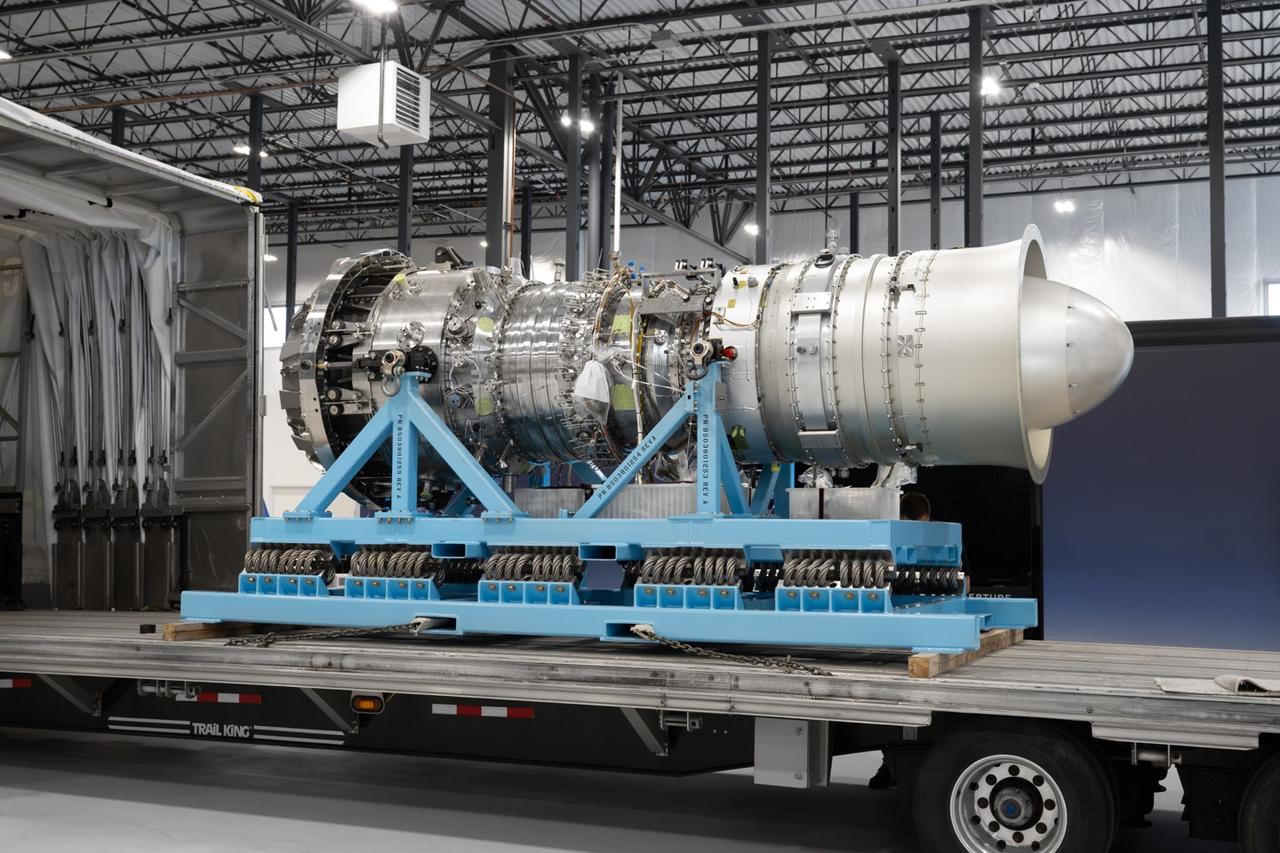
For 35 seconds, four camera angles show a test rig in a room crowded with pipes, cables and instrumentation. The clip that Boom Supersonic founder Blake Scholl posted on November 21 has an unusual pair of audiences. One wants an engine to carry passengers faster than sound. The other wants a generator that can keep a data center running for days on end. Both need the machinery in that room to work. Scholl’s footage · His follow-up identifying the firing
Boom had shown the assembled hardware in October and said it would fire before Thanksgiving. Scholl now reports that firing. What ran was Sprint Core, the prototype that brings a compressor, combustor and high-pressure turbine together. The recording shows the rig from several sides. It gives no calibrated output, fuel consumption or run duration. Thirty-five seconds is the length of the edit. Boom’s October test announcement
Inside that core the compressor raises the pressure of incoming air. Burning fuel heats the compressed air. The hot gas then spins a turbine linked back to the compressor, supplying the work needed to keep air moving through the machine. Engineers can test components individually for months and still have a question that only the assembled machine can answer: as fuel and airflow change together, do the temperatures, pressures and vibration follow the path their calculations predicted?
Boom says Sprint Core carries more than 1,000 sensors and that the whole rig, including support systems, has roughly 2,000. For both future products, the value of a firing lies in those records. A temperature or strain reading that departs from the model gives the team a place to investigate before committing to production hardware. The public clip establishes the company-reported test milestone. Boom has yet to release the readings that would show how closely the core matched its design. Boom’s instrumentation description
From there the buyers’ questions diverge. Boom’s Superpower design would use the gas stream to produce shaft power for a generator. Its advertised rating is 42 megawatts. A data-center operator comparing it with a conventional industrial gas turbine or a set of reciprocating engines would want net electrical output at the site’s summer temperature, fuel per megawatt-hour at the loads it expects, and the maintenance schedule. A machine that starts promptly can still be expensive to run continuously. The October target for first customer deliveries was mid-2027. A sustained, metered generator test would give that customer more to compare than the firing footage can. Superpower product description · October delivery target
For Symphony, the planned engine for Boom’s Overture airliner, the useful output is thrust. The inlet, fan, exhaust and their interaction with the airframe matter, as do weight, fuel burn over a flight and stable operation as altitude and speed change. Flight engines must also meet applicable airworthiness requirements. Scholl’s earlier XB-1 demonstrator flight and this stationary core test are distinct achievements with different equipment. Neither provides flight-test data for a complete Symphony. Boom’s description of the two programs · Federal Aviation Administration engine certification
The appeal of doing the hot-core work once is easy to see. If one test exposes a problem both products would have inherited, both teams can learn from the same afternoon in the test cell. Success will eventually require two quite different demonstrations: useful electricity at a price a customer will pay for hour after hour, and an engine light, efficient and reliable enough to earn its way onto an aircraft.