A French hybrid aircraft rolls out with two jobs for its power supply
Ascendance has rolled out its full-size demonstrator. Vertical lift and regional cruise put different demands on its hybrid power system.
Published November 21, 2026Intelligence / Transportation / Urban Air Mobility
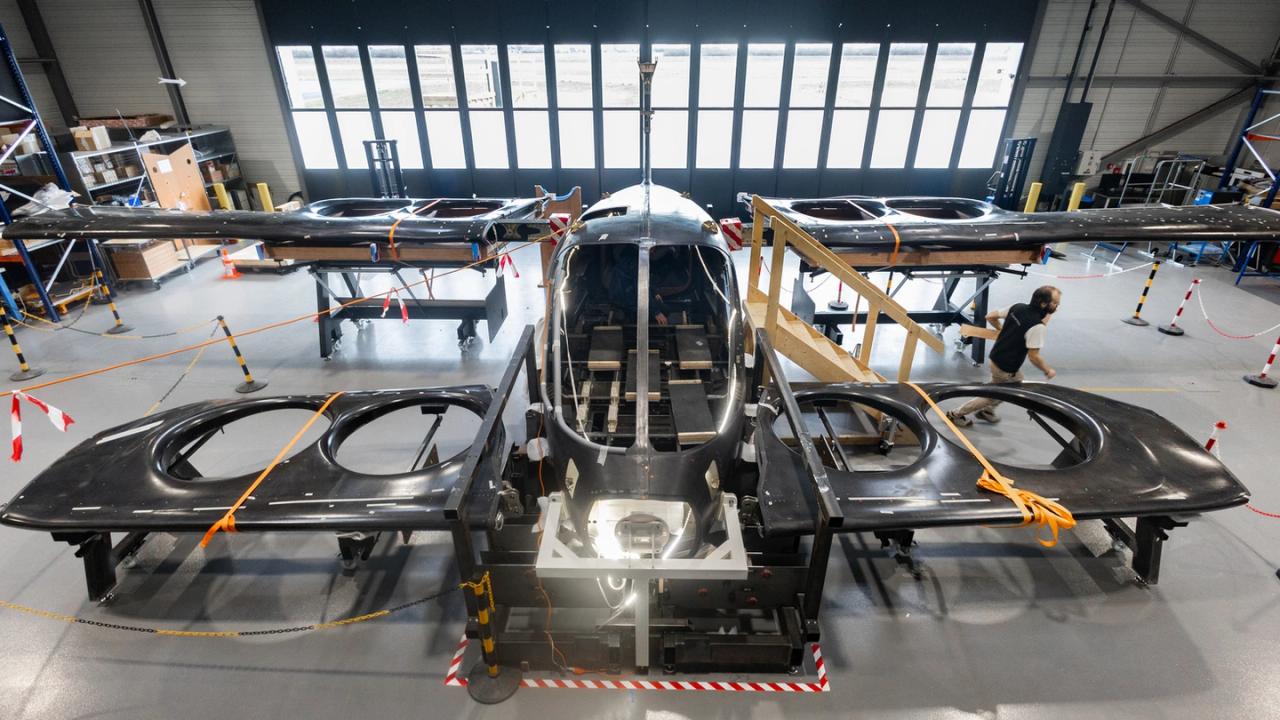
A regional aircraft that can rise from a small landing pad must do its hardest lifting before it has flown a kilometer. Ascendance, a French aviation developer, is betting that a battery can help meet that brief demand while a fuel-powered generator supplies energy for the longer trip. On November 19 it showed the first full-size ATEA demonstrator at Muret-Lherm airfield near Toulouse. AeroTime photographed the aircraft at the unveiling.
Eight rotors embedded in the wings provide vertical lift. Once the aircraft is moving forward, the wings can carry its weight and two propellers provide forward thrust. Both phases use electric motors. The hybrid system, which Ascendance calls STERNA, gives the motors access to stored electrical energy and electricity produced on board. Its appeal for a regional operator is the possibility of using a landing pad at either end without having to carry a battery large enough to supply the entire cruise.
Ascendance’s product page gives one version of the trip it has in mind. Alongside a configuration of one pilot and four passengers it lists a 350-kilometer net range and a 30-minute flight reserve. An operator would use the net distance to assess a route. The reserve has to be carried to cope with contingencies at the far end, even on a day when the aircraft lands without using it.
There is a practical catch in those numbers. The four seats specify places for people. They give no weight for the people and their bags. At a fixed takeoff weight, the generator, batteries, passengers and fuel must all fit within the same allowance. More fuel can buy cruise distance only while there is enough weight allowance for it. More time spent hovering draws on the power needed again at landing. To plan a service, an operator needs the distance the aircraft can fly at a stated cabin load, with that last vertical landing and reserve still available.
Some rollout coverage quotes a much longer projected range, up to about 900 kilometers. The published accounts do not attach the same payload, reserve and mission conditions to that figure. There is no basis yet to offer four passengers a 900-kilometer itinerary. The full-size demonstrator brings the company closer to collecting the measurements that could reconcile those figures. Having an integrated aircraft on the ground is a substantial step beyond having an airframe ready to receive its propulsion and controls, the milestone reported in February.
Ascendance told reporters at the unveiling that it was aiming for a first flight in early 2027, contingent on permission from the aviation authority. Ground testing precedes that flight. A later test that reports actual cabin load, fuel and battery use across takeoff, cruise and landing would give a regional operator more to work with than a photograph of a full-size aircraft or a maximum-range claim.
Sources
AeroTime’s dated on-site reporting and original photographs · Ascendance’s aircraft and mission figures · Aviation International News on ground tests and the longer range estimate · French regional reporting on the Muret rollout
Sources · 4
- https://www.aerotime.aero/articles/ascendance-atea-full-scale-vtol-unveiled-photos/amp
- https://www.ascendance-ft.com/products/atea
- https://www.ainonline.com/aviation-news/futureflight/2026-11-20/ascendance-rolls-out-atea-hybrid-electric-vtol-aircraft
- https://www.lalettrem.fr/actualites/ascendance-devoile-son-aeronef-hybride-electrique