A drone can stay on a power line. Can its reading change what the grid carries?
One stretch of a power line can cool in the wind while another stretch of the same circuit sits in still air.
Published November 23, 2026Intelligence / Energy / Grid Technology
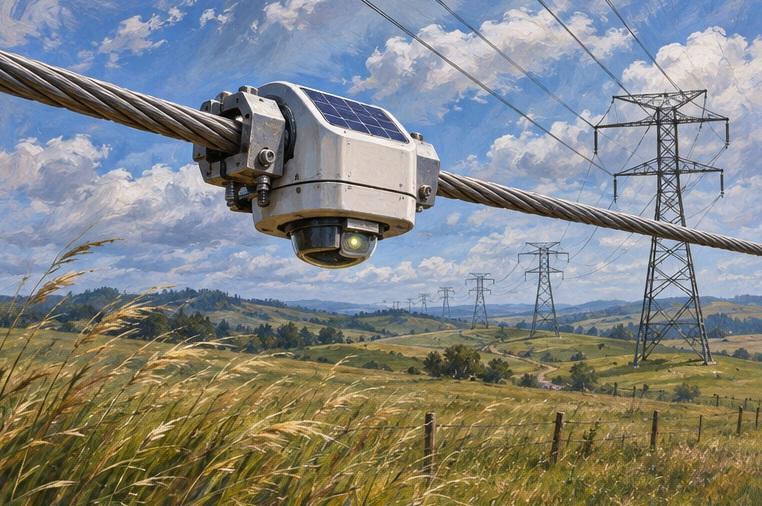
One stretch of a power line can cool in the wind while another stretch of the same circuit sits in still air. The same current runs through both. If the warmer conductor expands and hangs too low, a favorable reading from the breezy stretch gives the utility little reason to send more power.
Munich startup Nomadic has raised $6 million to put instruments closer to the wire. Its drones can remain on an energized conductor and draw power from its magnetic field. The company reports more than 20,000 cumulative hours on live lines, active use in German transmission and distribution networks, and deployments in Norway and the United States. Those hours measure time on the lines. The company has yet to report how many megawatt-hours a utility carried because of the readings. Nomadic’s financing and field report
Utilities already have a use for local observations. A line’s thermal rating sets how much current it can carry while respecting temperature and clearance limits. A fixed rating has to allow for unfavorable weather. A dynamic rating uses current conditions to update the allowable flow. Some days the extra information warrants a higher limit. On a hot, still day it may warrant a lower one. A U.S. Department of Energy review identifies an awkward feature of direct conductor measurements: a sensor describes conditions where somebody put it. DOE report to Congress · DOE review of field demonstrations
Nomadic’s proposition is that a utility can change where it measures. Today the utility’s own pilots bring the equipment to the site. The company reports testing at voltages up to 420 kilovolts and plans to let utility operators move the drones remotely in 2027. A movable sensor could test whether a model has correctly identified the stretch that limits the circuit. Once it moves on, the operator still needs a way to estimate conditions at its old location. Fixed instruments have a corresponding advantage: they can watch several places at once. Company account
In a separate New York Power Authority demonstration, dynamic ratings made up to 25 percent additional capacity available under favorable conditions. That result gives utilities a reason to test better measurements. It says little about what any one Nomadic device would add to a circuit that already has a weather model and sensors. DOE account of the New York demonstration
A useful utility trial would keep the existing rating system running and record the hours in which the extra readings would change its decision, in either direction. Then it could check how often demand called for the extra power and whether another piece of equipment already limited the flow. A drone that repeatedly confirms the existing rating may still buy the operator confidence. Operator records could show how often the readings changed dispatch and how much additional electricity actually flowed.
Sources
Nomadic’s financing and field report · DOE report to Congress · DOE review of field demonstrations · DOE account of the New York demonstration