MIT’s Design Copilot Lets Engineers Steer a Structure as It Takes Shape
A prototype design assistant points engineers toward structural features they may want to change, with a simulated buckling improvement in one worked example.
Published November 14, 2026Intelligence / Artificial Intelligence / Predictive Analytics
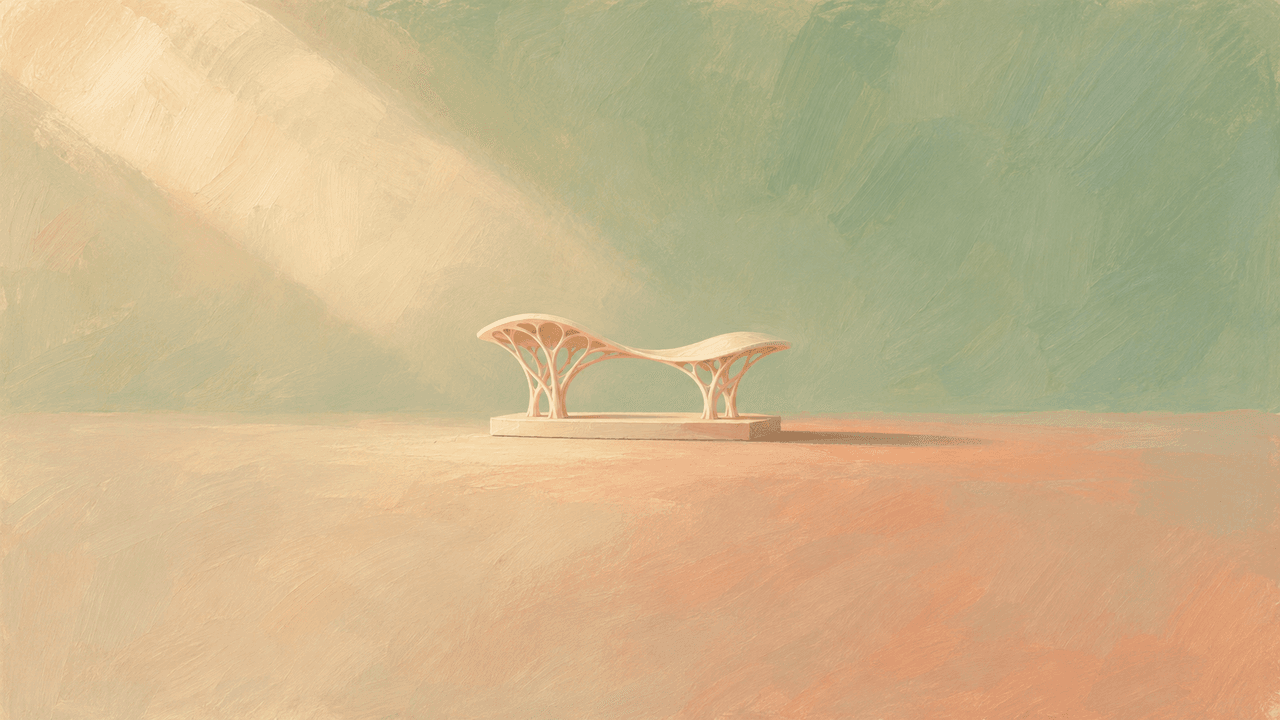
Several beams crowded into a single joint give an engineer a practical problem: how will anyone build it? Computer-generated structures can use material efficiently while leaving awkward connections for the people who must manufacture and assemble them.
Researchers at the Massachusetts Institute of Technology (MIT) have developed an artificial intelligence assistant that brings those decisions into the design process earlier. As software develops a structure, the assistant highlights places where an engineer may want to intervene. The designer can adjust local thickness requirements and let the calculation continue.
In one computational demonstration, the revised design’s calculated buckling load was 39 percent higher than the initial design’s. The worked example took 344 seconds, compared with 329 seconds for conventional optimization, according to the authors’ preprint. That result concerns one example’s resistance to instability under compression.
For design offices, the potential benefit is fewer rounds of correction between computer analysis and fabrication. A fabricator’s concerns about a crowded connection could influence the shape while it is developing. Formal comparisons of the complete workflow with conventional design methods remain ahead.
Giving the engineer a place to intervene
The study appeared November 10 in Communications Engineering, following a January preprint. MIT described it in a November 13 announcement. Its foundation is topology optimization: software distributes material within a permitted space to satisfy requirements for loads, supports and material use.
The assistant uses a U-Net, a neural network that identifies regions in an image. Training examples encode simplified preferences: select the longest structural member or the connection joining the most members. The training selections are generated synthetically, teaching the model to recognize those two kinds of features.
Josephine Carstensen, an MIT associate professor of civil and environmental engineering, described the aim as getting designers to “infuse their domain knowledge as the design evolves.”
Buckling explains why a small change in shape can matter. Under compression, a slender member can bow and become unstable while its material remains capable of carrying more stress. Thickening or supporting that member changes its resistance to this failure. The reported 39 percent gain comes from a linear buckling analysis of a demonstration design.
From generated shape to working hardware
NASA’s experience illustrates the practical demands. In a 2023 account of generative design at Goddard Space Flight Center, engineers described specifying attachment points, clear optical paths and room for technicians’ hands. Vendors could machine the resulting shapes, while engineers assessed them through established structural-validation processes.
MIT’s prototype gives engineers another opportunity to apply that judgment during development. Its value in a working design office will depend on whether the recommendations shorten review, reduce fabrication problems and produce parts that meet their requirements in physical tests.
Sources
Sources · 5
- https://news.mit.edu/2026/new-ai-copilot-helps-engineers-design-better-structures-1113
- https://www.nature.com/articles/s44172-026-00818-x
- https://arxiv.org/html/2601.10859v1
- https://ocw.mit.edu/courses/16-001-unified-engineering-materials-and-structures-fall-2021/mit16_001_f21_lec33lec34lec35.pdf
- https://www.nasa.gov/technology/goddard-tech/nasa-turns-to-ai-to-design-mission-hardware/