
Intelligence
Jetson ONE: The Ultralight eVTOL Pioneering the Personal Air Mobility Market
Published March 17, 2026Intelligence / Transportation / Urban Air Mobility
With production sold out years in advance, the Jetson ONE is leveraging FAA ultralight regulations to deliver the first wave of personal electric aircraft. Its success provides a critical proof-of-concept for wider civilian applications, from emergency services to infrastructure inspection, while highlighting the battery and regulatory challenges facing the nascent Urban Air Mobility sector.
The Dawn of Personal Air Mobility
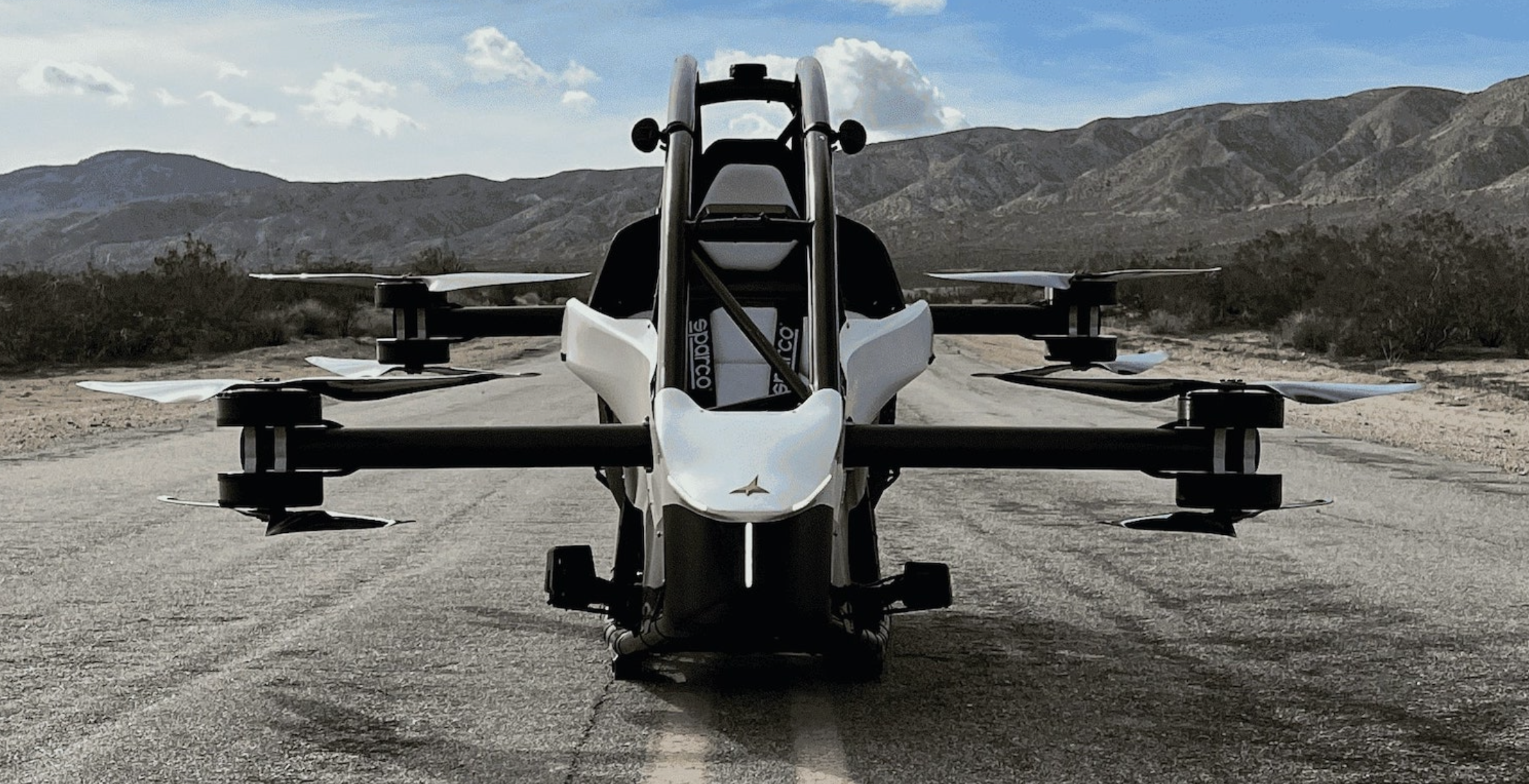
The concept of personal flight has officially transitioned from speculative fiction to a tangible, albeit high-end, consumer product. At the forefront of this shift is the Jetson ONE, a single-seat electric Vertical Take-Off and Landing (eVTOL) aircraft that is not a future prototype but a production vehicle being delivered to customers today. By strategically designing the vehicle to comply with the Federal Aviation Administration's (FAA) Part 103 regulations for ultralight aircraft, Jetson has successfully bypassed the lengthy and costly certification hurdles that encumber larger air taxi developers, creating a direct-to-consumer pathway for a new class of mobility.
This strategic positioning has unleashed a torrent of market demand. With a price tag of $128,000, the Jetson ONE is positioned as a luxury recreational vehicle, and its production slots for 2025 and 2026 are completely sold out, with the company now taking reservations for 2028 deliveries. This demand has been fueled by savvy marketing, including a delivery to Oculus founder Palmer Luckey and a feature in a MrBeast video that garnered over 115 million views. This level of exposure has created a viral feedback loop, solidifying the Jetson ONE's status as the most visible and sought-after personal eVTOL on the market.
Underpinning this demand is a carefully calibrated set of performance specifications. The aircraft's eight electric motors provide a top speed of 102 km/h (63 mph) and, crucially, a flight time of approximately 20 minutes. While this endurance seems limited, it is perfectly suited for its intended recreational use case. Furthermore, Jetson has addressed the primary bottleneck of electric vehicles—charging time—by engineering a swappable battery system. This allows an operator to land, replace the depleted battery with a fresh one in minutes, and resume flight, a critical feature for maximizing usability in a recreational setting.
For a nascent technology class, safety is the ultimate currency for public acceptance. Jetson has engineered the vehicle around a core of redundancy, featuring a triple-redundant flight computer and a propulsion system that can maintain stable flight even with the complete failure of one motor. This is supplemented by a ballistic parachute for catastrophic emergencies. While competitors in the wider eVTOL space, such as AIR ONE and LIFT HEXA, have experienced public crashes and failures during their uncrewed testing phases, Jetson's ability to transition to piloted production units without a high-profile incident is a significant differentiator that builds crucial consumer and regulatory confidence.
Civilian Spillover Beyond Recreation
While the Jetson ONE is marketed as a recreational vehicle, its true strategic importance lies in its role as a technological pathfinder for broader civilian applications. The successful demonstration of its use in mountain rescue operations with Poland's GOPR showcases its potential to revolutionize emergency services. The ability to deploy a single operator to a remote, inaccessible location in minutes instead of hours represents a paradigm shift for search and rescue, disaster relief, and medical evacuation logistics. This real-world test provides a blueprint for how this technology can be adapted for public good.
The aircraft's operational success serves as a critical proof-of-concept for other commercial uses that fall short of full-scale Urban Air Mobility (UAM). Industries such as agriculture, energy, and infrastructure could leverage such vehicles for rapid crop surveying, pipeline inspection, or remote equipment maintenance. The Jetson ONE demonstrates that a small, license-free eVTOL can provide a cost-effective and efficient alternative to helicopters or ground crews for specific, targeted missions, opening up a new intermediate market between consumer drones and certified commercial aircraft.
Looking forward, the primary obstacle to expanding the operational envelope of personal eVTOLs remains battery technology. The current 20-minute flight time is a hard limit imposed by the energy density of today's lithium-ion cells. Future advancements in battery chemistry will be essential to extend range and endurance, unlocking more practical transportation and commercial applications. Concurrently, scaling production from a boutique operation to mass manufacturing will be a major industrial challenge, requiring significant investment in supply chains and automated assembly to meet the demonstrated market demand and lower unit costs.
Ultimately, the Jetson ONE's most enduring legacy may be its role in shaping public perception and regulation. By operating safely under the existing ultralight framework, it provides invaluable real-world data on how these vehicles interact with low-altitude airspace. This data will inform future UAM regulations, helping to create the traffic management systems and safety protocols necessary for a future where personal electric flight is an integrated part of our urban and rural landscapes. It is not the final form of personal air travel, but it is the critical first step, making the future of mobility tangible today.