Fervo Sends Test Power From Its Second Cape Station Block
The Utah geothermal expansion has reached grid synchronization, bringing another generating unit through commissioning toward commercial operation.
Published November 11, 2026Intelligence / Energy / Next-Gen Renewables
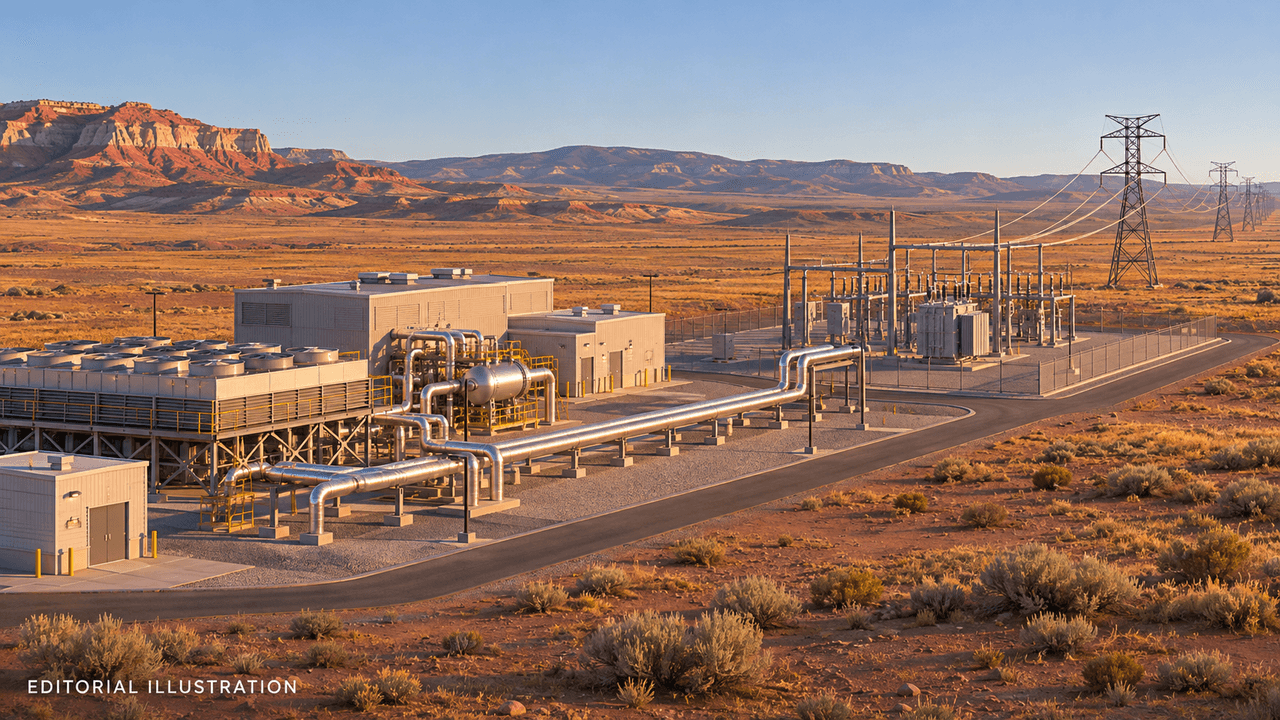
Fervo Energy reported on November 9 that the second power block at Cape Station in Beaver County, Utah, had synchronized with the electricity grid and was exporting test energy. GeoBlock 2 has entered early operations after hot commissioning, advancing the roughly 100-megawatt first phase beyond its initial operating unit. 1
The three blocks are each designed for about 33 megawatts. The first reached contractual commercial operation on September 30 and is delivering power under its purchase agreement, according to Fervo. The second and third are expected to reach their contractual operating dates by January 1, 2027, as crews finish and test the remaining equipment. 1
Cape Station uses enhanced geothermal technology to bring underground heat to a surface power plant. In this approach, controlled injection creates or reopens pathways through hot rock. Water circulates through the reservoir, absorbs heat and returns to the surface. Fervo combines horizontal drilling with downhole fiber-optic measurements of flow and temperature to help manage that process. The resulting plant supplies electricity through a grid connection. 2,3
The attraction for electricity customers is a source of renewable power whose heat supply continues through the night. Turning that resource into dependable output requires the wells, pumps and generating equipment to work together. A second block sending electricity to the grid gives the development another opportunity to establish that operating record. The measures that matter to customers include net energy delivered and how consistently the equipment is available when needed.
Grid synchronization and test exports are steps in that process. They establish that a generating unit has reached the stage of operating with the wider power system while its commissioning and acceptance work proceeds. Contractual commercial operation is a further milestone with its own requirements. Tracking the second block through that transition will show how the commissioning schedule compares with the company's commitments. 1
The next expansion has a different schedule and customer commitment. Fervo's grid-connected agreement with Google covers 396 megawatts, with first power expected in 2028. Experience from the earlier blocks can inform the work of bringing that capacity into service. Crews will need to build and connect new equipment while maintaining the performance of the units already supplying customers, making operations and construction part of the same development effort. 1
The development challenge extends beyond drilling a productive well. Surface equipment has to arrive and pass its tests, the plant must connect to the grid, and operating teams need procedures that hold up over repeated use. Fervo's technical approach uses measurements from the wells to observe how the reservoir behaves. Combining that information with surface performance can help engineers understand where heat, water flow or equipment operation limits the electricity delivered. 3
For utilities and communities evaluating geothermal power, repeated blocks can make construction and operating performance easier to compare. The second unit's eventual commercial-operation date will provide one such observation. A longer record of net generation, maintenance interruptions and reservoir behavior will show how much dependable electricity this phase can supply across seasons, and give future buyers a firmer basis for judging its costs.
Sources
2. United States Department of Energy explanation of enhanced geothermal systems
3. Fervo technical description of horizontal drilling and downhole flow and temperature measurements